hey
https://bit.ly/2EWT8f9


Saturday, June 25, 2016
Spam blog posts
Hi, subscribers to this obsolete blog,
Somehow a spam post (titled "Hello", which I've since deleted) entered this blog today even though I'd changed the password just yesterday for security reasons! - Alex
Somehow a spam post (titled "Hello", which I've since deleted) entered this blog today even though I'd changed the password just yesterday for security reasons! - Alex
Sunday, September 12, 2010
June Demolishment of 50 Bahá'í Homes in Ivel Continues to Receive Press
Posted: 11 Sep 2010
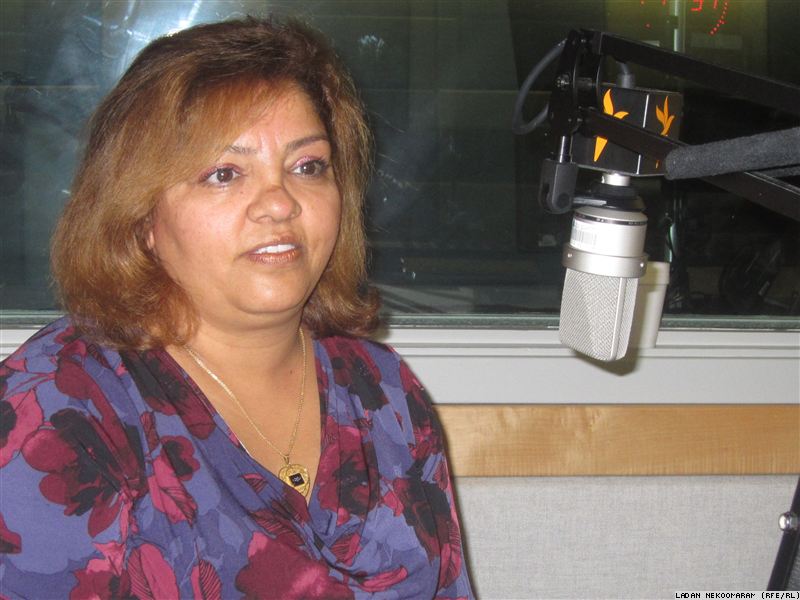
Ferdosieh Nikoumanesh

(9 Sep 2010 – Radio Free Europe) Ferdosieh Nikoumanesh remembers a time when she and her family could live in peace as practicing Baha'is in the Iranian city of Ivel, where more than 50 Baha'i homes were demolished in June. Her childhood home, her grandparents' home, and her grandfather's store were among the many properties burned to the ground. Nikoumanesh and her husband now live in a suburb of Washington, D.C.
Nikoumanesh spent many of her childhood summers in Ivel, northeast of Tehran in Mazandaran Province, visiting her grandparents, who lived in the village until 1983.
She left Ivel when she was a little girl but still holds many memories of living alongside practicing

Ivel, Mazandaran, Iran
Muslims. Baha'is have resided in Ivel for more than 160 years and once made up more than half of the population — building schools, a hospital, and stores.
While her family's homes and shop were destroyed this summer, her memories remain alive.
"The best part of the summer was with my grandparents. The feelings I have toward the land [in Ivel] are because of how my grandparents took us there and showed us how to experience its generosity," she said.
She recalled raising livestock, picking flowers in the rich landscape, and having candlelit dinners over storytelling.
The current Iranian government made no apparent efforts to prevent the destruction of the Baha'i homes last June, nor has an investigation been launched into who orchestrated the demolition, despite efforts by the Baha'i community to seek justice.
On August 12, U.S. Secretary of State Hillary Rodham Clinton issued her strongest statement yet in support of the Baha'i community and in opposition to Iran's repression of religious minorities. "The United States is deeply concerned with the Iranian government's continued persecution of Baha'is and other religious minority communities in Iran," Clinton said in a statement. "The United States is committed to defending religious freedom around the world, and we have not forgotten the Baha'i community in Iran."
While the United States may have stepped up its criticism, the people of Ivel have yet to find justice for the loss of their homes.

The home, since destroyed, of the grandparents of Ferdosieh Nikoumanesh. "The best part of the summer was with my grandparents," says Ferdosieh Nikoumanesh.
"Two Baha'i men from Ivel — Faramarz Rohani and Mahmood Piri — sent letters and complained to the courts in Saari, Kia Sar, and Telma Dare. None of them gave the right response," said Nikoumanesh. "They even said since this order was from the higher courts, nothing could be done."
While the international community has spread awareness of the issue and many Muslims in the country oppose the destruction of Baha'i property, the government has done little to respond.
"Recently, there have been many attacks on Baha'i homes, cemeteries dug up, and sites of worship destroyed," said Shastri Purushotma, the human rights representative for the U.S. Baha'i community. "But how can 50 houses be demolished without some prior arrangement to do that level of demolition? We don't have documents showing the government was behind it, but all of these things need planning, heavy equipment, and government support."
Nikoumanesh hopes to one day return to Ivel but knows the dangers she would face if she visited anytime soon. She and many members of the Iranian Baha'i diaspora continue to push for accountability in acts of vandalism toward Baha'is.
"My grandparents have passed, but we children still have faith in being able to return to Ivel and re-experience good moments of our childhood we had there," she says.
She then recited a poem written by Ali Ahmadi on the destruction of homes in Ivel:
"Oh, home, you
are still alive
even if it's not
within your walls
within our hearts you are."
– Ladan Nekoomaram & Sarvazad Katouzian
Source: http://www.rferl.org/content/Bahais_In_Iran_Await_Justice_for_Demolished_Homes_Graves/2153322.html
From Iran Press Watch. Link to this article is here.
Saturday, August 28, 2010
Scotland Religious Leader Adds Voice to Protests Against Sentences of 7 Bahá'ís
A further signal victory for justice - Archbishop of Scotland, head of the Catholic Bishops' Conference of Scotland, demonstrates solidarity with the plight of the leaders of a different faith.
Posted: 26 Aug 2010

LONDON, 26 Aug – Baha'is in Scotland and throughout the UK have welcomed a statement issued by Cardinal Keith O'Brien, Archbishop of St Andrews and Edinburgh and head of the Catholic Bishops' Conference of Scotland.
Cardinal O'Brien strongly condemns the unjust imprisonment of seven leaders of the Baha'i community in Iran. His statement reads:
Having been united in prayer with seven Baha'i Leaders, who were arrested more than two years ago in Iran, I deeply regret the news that these leaders have now been sentenced to 20 years imprisonment.
I am happy to join in the recent statement issued by William Hague MP, Foreign Secretary, on this matter and regard what has happened as being a most appalling transgression of justice and at heart a gross violation of the human right of freedom of belief.
Unfortunately, I myself cannot be at the forthcoming vigil of protest on Saturday 28 August 2010 by the St Mungo Museum in Cathedral Square, Glasgow, but I unite myself in prayer for those of the Baha'i faith who are suffering at this present time in Iran and also to the many other peoples of goodwill who are suffering for their faiths in other parts of the world.
+ Keith Patrick Cardinal O'Brien
Archbishop of St Andrews and Edinburgh
"We are grateful that Cardinal O'Brien has once again spoken out in defence of the Baha'is in Iran," said Allan Forsyth of the Baha'i Council for Scotland. "We are heartened that leaders of Scotland's faith communities are so willing to demonstrate inter-faith solidarity and support in times of stress."
From Bahá'í News UK
Friday, August 20, 2010
Awareness of Plight of Persecuted Baha'is in Iran Seen in Statement from US Representative
A well-informed message from a House Representative of Nevada in defense of the Baha'is in Iran in general and the imprisoned 7 Baha'i former leaders in particular.

Reno4Iran activists received a letter from Nevada Representative Dean Heller regarding the persecution of Baha'is in Iran. An excerpt of the letter (which was typed and snail-mailed originally) is below. Thanks to all those in positions of power that continue to voice their concerns for the people of Iran and pressure the IRI to adhere to its international human rights obligations.
"As [I've] mentioned before, the Iranian government is an oppressive regime that withholds basic liberties from it's citizens. The persecution you mentioned involving members of the Baha'i faith is horrible and must end. As you may know, in 2006 Iran's Armed Forces Command Headquarters ordered the Ministry of Information, the Revolutionary Guard, and the Police Force to identify members of the Baha'i Faith in Iran and monitor their activities. In that same year, the largest roundup of Baha'is took place since the 1980's. The Iranian Interior Ministry ordered provincial officials to "cautiously and carefully monitor and manage" all Baha'i social activities. The Central Security Office of Iran's Ministry of Science, Research and Technology ordered 81 Iranian Universities to expel any student discovered to be a Baha'i.
"In 2007, the situation worsened. More than two thirds of the Baha'is enrolled in universities were expelled once identified as Baha'is. Police entered Baha'i homes and businesses to collect details on family members. Twenty-five industries were ordered to deny licenses to Baha'is. Employers were pressured to fire Baha'i employees and banks were instructed to refuse loans to Baha'i-owned businesses. In November 2007, three Baha'i youths were detained for educating underprivileged children. The following month, the Iranian Parliament published a draft Islamic penal code, requiring the death penalty for all "apostates"- a term applied to Baha'is and any convert away from Islam.
"Again, this government-sponsored religious and political persecution must end. Every Iranian should be able to live without fear of religious, political, and economic persecution in Iran. The Iranian government should ensure policies are enacted that would protect the freedoms of all of its citizens…I look forward to working to ensure both political and religious liberties are promoted within Iran."
Tuesday, August 10, 2010
Shirin Ebadi Laments "Irregularities" in Yaran Trial Culminating in Sentences
The prominent rights group International Campaign for Human Rights in Iran speaks out regarding the recent sentencing of the Yaran.

Iran: Appeals Court Should Overturn Unjust Sentencing of Baha'i Leaders
Shirin Ebadi: Trial "Riddled with Irregularities"
 (10 August 2010) Seven leaders of the Iranian Baha'i community, each of whom has been sentenced to 20 years in prison on security, espionage and other crimes, should be freed by an appeals court, the International Campaign for Human Rights in Iran said today.
"We consider the arrest, detention, trial, and sentencing of these individuals to be politically motivated, discriminatory, unjust, and illegal under Iranian and international law," said Aaron Rhodes, a spokesperson for the Campaign.
"They have been sentenced for being Baha'is, nothing else, and their incarceration thus expresses a policy of oppression of the Baha'i Faith and its members," he said.
The seven Baha'i leaders, who were arrested in the spring of 2008, include Fariba Kamalabadi, Jamaloddin Khanjani, Afif Naeimi, Saeid Rezaie, Mahvash Sabet, Behrouz Tavakkoli, and Vahid Tizfahm. They had been jailed for 20 months prior to being charged and denied contact with their attorneys. The sentences will reportedly be appealed.
In January 2010, in the context of the Ashura protests of December 2009 and those that had followed the June 2009 presidential election, charges against the detained Baha'i leaders were expanded. State-controlled news media claimed Baha'is had masterminded the protests, although no evidence has been produced to prove the allegations.
Shirin Ebadi, who defended the seven Baha'i leaders, told the Campaign that her clients' prosecution was "riddled with irregularities."
"As their lawyer, I should have had access to my clients from the time of their detention and I should have known of the charges against them. But I was not allowed to see them," Ebadi said. She also pointed out that given the advanced age of the Baha'i leaders, their 20-year prison sentence is effectively life imprisonment, as it unlikely they will survive beyond their prison term.
Members of the Baha'i Faith in Iran number approximately 300,000, making them the largest non-Muslim religious minority group. In recent years the persecution of Baha'is has intensified to include cemetery desecration, arbitrary detention, home raids, property confiscation, work expulsion and denial of basic civil rights. Iranian Baha'i youth continue to be denied the right to higher education, and any university found to have Baha'i students is ordered to expel them. Baha'i professionals are denied government jobs and face discrimination from private businesses because of their faith. Even those who come to their defense are targeted. Shirin Ebadi has come under fire for taking up the case of seven Baha'is listed above.
According to the Baha'i International Community, there are currently 47 Baha'is in detention throughout Iran. Baha'is released on bail have been ordered to pay exorbitant amounts. For example, Aziz Samandari and Jinous Sobhani, a former secretary at the Defenders of Human Rights Center, were released on 11 March 2009 on bail of 700 million Rials (approximately $73,000). Didar Raoufi, Payam Aghsani and Nima Haghar were released on the same day and ordered to pay the same amount. Shahrokh Taef was released six days later on 17 March 2009 having paid the same amount in bail.
Diane Ala'i, of the Baha'i International Community, told the Campaign that as the Baha'i Faith is classified as an "illegal group," many of the jailed Baha'is "are accused of acting against the country's national security or participation in illegal groups, or teaching the Baha'i Faith."
"All Baha'is are in danger of arrest," she said.
Listen to the Weekly Iran Rights Podcast at:
For the latest human rights developments in Iran visit the Campaign's website at www.iranhumanrights.org
Sunday, August 8, 2010
Iran Sentences Innocent Yaran to 20 Years' Jail, Say Reports

A situation that can only hone the skill of patience among the millions of spectators to another farce of a verdict.
Praised be Thou, O Lord my God! Thou beholdest my perplexity, and the depth of mine anguish, and the agony of my soul, and the afflictions which beset me. By Thy glory! My heart crieth to Thee by reason of the things that have befallen my loved ones in Thy path...
And now I implore Thee, by the eternity of Thy Self, to enable me to be patient in these tribulations which have caused the Concourse on high to wail and the denizens of the everlasting Paradise to weep, and through which all faces have been covered with the tawny dust provoked by the anguish that hath seized such of Thy servants as have turned towards Thy Name, the Most Exalted, the Most High. No God is there but Thee, the Almighty, the Inaccessible, the Ever-Forgiving, the Most Compassionate.
The virtues and attributes pertaining unto God are all evident and manifest, and have been mentioned and described in all the heavenly Books. Among them are... forbearance, resignation to whatever the Almighty hath decreed, contentment with the things His Will hath provided, patience, nay, thankfulness in the midst of tribulation, and complete reliance, in all circumstances, upon Him. These rank, according to the estimate of God, among the highest and most laudable of all acts. All other acts are, and will ever remain, secondary and subordinate unto them….
And now I implore Thee, by the eternity of Thy Self, to enable me to be patient in these tribulations which have caused the Concourse on high to wail and the denizens of the everlasting Paradise to weep, and through which all faces have been covered with the tawny dust provoked by the anguish that hath seized such of Thy servants as have turned towards Thy Name, the Most Exalted, the Most High. No God is there but Thee, the Almighty, the Inaccessible, the Ever-Forgiving, the Most Compassionate.
The virtues and attributes pertaining unto God are all evident and manifest, and have been mentioned and described in all the heavenly Books. Among them are... forbearance, resignation to whatever the Almighty hath decreed, contentment with the things His Will hath provided, patience, nay, thankfulness in the midst of tribulation, and complete reliance, in all circumstances, upon Him. These rank, according to the estimate of God, among the highest and most laudable of all acts. All other acts are, and will ever remain, secondary and subordinate unto them….
Reports say Iran's Baha'i leaders "sentenced"

8 August 2010
NEW YORK — The Baha'i International Community has received reports indicating that seven Iranian Baha'i leaders have each received jail sentences of 20 years.
The two women and five men have been held in Tehran's notorious Evin prison since they were arrested in 2008 – six of them on 14 May and one of them two months earlier.
"If this news proves to be accurate, it represents a deeply shocking outcome to the case of these innocent and harmless people," said Bani Dugal, the principal representative of the Baha'i International Community to the United Nations.
"We understand that they have been informed of this sentence and that their lawyers are in the process of launching an appeal," said Ms. Dugal.
The prisoners – Fariba Kamalabadi, Jamaloddin Khanjani, Afif Naeimi, Saeid Rezaie, Mahvash Sabet, Behrouz Tavakkoli, and Vahid Tizfahm – were all members of a national-level group that helped see to the minimum needs of Iran's 300,000-strong Baha'i community, the country's largest non-Muslim religious minority.
The trial of the seven consisted of six brief court appearances which began on 12 January this year after they had been incarcerated without charge for 20 months, during which time they were allowed barely one hour's access to their legal counsel. The trial ended on 14 June.
The defendants were accused of espionage, propaganda activities against the Islamic order, and the establishment of an illegal administration, among other allegations. All the charges are completely and categorically denied.
Source: http://news.bahai.org/story/786
Photos Copyright Bahá'í International Community. View here.
Subscribe to:
Posts (Atom)




 Posts
Posts


