Saturday, September 5, 2009

Ayatollah confronts Iranian regime: labels it un-Islamic, condemns injustices


Montazeri Condemns Iranian Regime

Posted: 27 Aug 2009

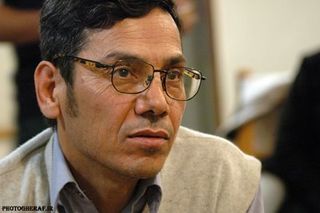
Montazeri Editor's Note:  Yesterday, August 26, Grand Ayatollah Montazeri issued a proclamation in response to a letter dated August 23 by some 293 Iranian intellectuals, journalists, human rights activists and other concerned citizens.  Iran Press Watch is working on a translation of that proclamation and will post it shortly.  Meanwhile, a description of this remarkable statement was published by Radio Zamaneh, which we share below for our readers' information.

Ayatollah Montazeri, a senior dissident cleric, condemned the government crackdown on protesters after the re-election of Mahmoud Ahmadinejad and claimed: "The authorities should at least have the courage to announce that this regime is neither a republic nor Islamic and no one is allowed to protest, to express an opinion or to criticize anything."

Montazeri's letter, which was in response to 300 activists who had called for the intervention of senior Shiite leadership to resolve the current crisis, was published in Ayatollah Montazeri's Communications Headquarters. In it, Montazeri claims that he has urged the government on several occasions to desist from violence but to no avail. He presses on for the release of all detainees and calls the mass trials of reformists "a travesty of Islamic law."

"Islam," he points out, "is a truly divine religion that in it freedom of opinion and speech are evident and fully transparent…even in the acceptance of this faith, the Quran clearly states that there must be no force or obligation. The way of the Prophet and the Imams was also thus that people in sheer freedom and without any fear of any kind would express their opinions and critique any issue."

Grand Ayatollah Montazeri was a close collaborator of Ayatollah Khomeini in the Iranian Revolution of 1979 and in the government that issued from it. He was set to succeed Ayatollah Khomeini but was put aside over disagreements with government excesses. He was under house arrest for five years for criticizing the government. He now lives in Qom and as a Grand Ayatollah, remains a high authority on Islamic theology and law. He has been a staunch critic of  the Supreme Leader, Ayatollah Khamenei.

The government has tried to silence post-election protests against the disputed victory of Mahmoud Ahmadinejad in June by detaining thousands and violently putting down mass demonstrations. Mass trials of reformist leaders have been set up to parade recanting political activists and televise confessions pointing at a foreign-backed conspiracy to topple the regime. Opposition leaders have denied the charges and spoken out against torture and forceful extraction of confession in prisons.

[Posted on August 27, 2009, at Radio Zamaneh.]


Mona (17), martyred in 1983, keeps attracting eulogies


Yet another eulogy of this steadfast Baha'i youth who was martyred for serving her faith in the capacity of a children's teacher.

They Hanged Her for Teaching Love

Posted: 31 Aug 2009

Mona Editor's Note: The following essay is reprinted from American Thinker and is by Amil Imani, a pro-democracy activist in the United States. Mr. Imani is a columist, literary translator, novelist and essayist, who has been writing and speaking out for the struggling people of his native land, Iran.

By Amil Imani

She is called the Angel of Iran, because she lived her short life angelically. The demonic Islamist Mullahs, true to their nature, couldn't bear an angel in their midst. On June 18, 1983, they hanged the young woman, barely past childhood, for refusing to renounce her belief: the belief in love, justice, and equality for all children of God.

Her name was Mona, a 17-year old Baha'i Character School (Sunday school) teacher. Her pupils loved the indescribably gentle loving teacher who taught them to grow up as exemplary humans with hearts brimming with the love of God, all his people and his creation.

One day the Mullahs' agents came to her house while the young school-girl was studying for her next day English exam. The savage Islamists had another much tougher exam in mind for her to be administered in the horrific prison of the Mullahs. They were certain that they could break the frail young woman under pressure and torture; that they could make her recant her faith and adopt their bigoted creed.

Our great Zoroaster, the luminous ancient prophet of Persia, spoke of the ongoing battle between the forces of good under Ahuramazda-God, and the forces of evil directed by Ahriman-the Satan. Zoroaster warned us not to fall for the enticements or be deceived by the machinations of Ahriman. He further informed us that evil can be recognized by the deeds of its people; people who would oppose the precepts of Ahuramazda.

And the child-woman Mona was seen by the Islamist clergy as a threat to their very demonic precepts and practices. They felt compelled to either convert her to their creed of darkness or extinguish her young life.

Mona, the young teacher, deeply loved children and believed that they had to be brought up as champion workers for Ahuramazda.

Baha'is claim that the founder of their religion, Baha'u'llah, is the reappearance of the spirit of Zoroaster; that Zoroaster's triad teachings of Good Thoughts, Good Speech, and Good Behavior are elaborated in greater details by Baha'u'llah.

Mona's lessons for the children, a detailed exposition of Zoroaster's teachings, are summarized in the passage below by Baha'u'llah.

"Be generous in prosperity, and thankful in adversity. Be worthy of the trust of thy neighbor, and look upon him with a bright and friendly face. Be a treasure to the poor, an admonisher to the rich, an answerer to the cry of the needy, a preserver of the sanctity of thy pledge. Be fair in thy judgment, and guarded in thy speech. Be unjust to no man, and show all meekness to all men. Be as a lamp unto them that walk in darkness, a joy to the sorrowful, a sea for the thirsty, a haven for the distressed, an upholder and defender of the victim of oppression. Let integrity and uprightness distinguish all thine acts. Be a home for the stranger, a balm to the suffering, and a tower of strength for the fugitive. Be eyes to the blind, and a guiding light unto the feet of the erring. Be an ornament to the countenance of truth, a crown to the brow of fidelity, a pillar of the temple of righteousness, a breath of life to the body of mankind, an ensign of the hosts of justice, a luminary above the horizon of virtue, a dew to the soil of the human heart, an ark on the ocean of knowledge, a sun in the heaven of bounty, a gem on the diadem of wisdom, a shining light in the firmament of thy generation, a fruit upon the tree of humility."

Ten Baha'i women of Shiraz, Iran were among the many Baha'is who were arrested by the Islamists for their faith. The young Mona was one of them. These women endured months of endless abuse in the prison of the Mullahs, yet every one of them refused under threat of death to recant their faith of love.

The heartless Mullahs finally decided to make good on their threat and hanged these magnificent human beings, one-by-one. The Angel of Iran was the last to be hanged for she wished to pray for each woman as she was hanged. When Mona's turn came, she kissed the noose and placed it around her own neck with prayers on her lips.

The savage Islamists hanged the magnificent child-woman Mona after a long period of tortuous imprisonment. By killing her, the agents of Ahriman aimed to kill love. But assuredly they can never kill love. They only kill the lover.

Oh, you earthly angels!

You immigrating birds,

Whose only adornment

Is a bed of white feathers!

The innocent children of Iran,

Are wearing your white glowing robe,

And have left the memories of life,

To others!

I see the poor black swallows,

Flying over the ruins of our city!

I see overflowing pain,

Intertwined,

With the hearts of every Persian!

My heart stops palpitating!

My breath starts to dry up!

My faith simply fades away,

And my bed falls silent.

[Posted on August 31, 2009, at American Thinker]


From Iran Press Watch. More on the fate of Mona Mahmudnizhad and her nine fellow martyrs here.

Iranian rights lawyer adamant in face of imprisonment, intimidation


Lawyer spent 10 weeks in prison 'for nothing'

Posted: 01 Sep 2009

Soltani Editor's Note: Iran Press Watch has previously reported on the detention (IPW1) and release (IPW2) of Abdolfattah Soltani, one of the lead lawyers for the imprisoned former Baha'i leaders in Tehran. Today's Los Angeles Times article provides further details that might be of considerable interest to our readers:

By Los Angeles Times

On the 28th day of his detention inside Iran's Evin Prison, he was granted his first family visit.

It was then that he found out that while he had been locked up, his sister had died in a car accident.

Prison authorities offered to let Abdul-Fatah Soltani attend the mourning ceremony.

There was just one condition.

The famed human-rights lawyer had to promise that he wouldn't speak out to the media about his incarceration.

He rejected the offer, missing the chance to join his family to grieve for his sister.

"I did not believe I had done anything wrong, so accepting their condition was against my belief and my principles," Soltani, now free, told The Times in an interview at his downtown office a few days ago. "Accepting their condition was a rubber stamp on my non-committed crime."

Instead he vowed to prison authorities that once he was out of prison, he would haul all of them into court, suing them for unjustly locking him up.

Soltani is among Iran's small cadre of human-rights lawyers and is the spokesman for the Center for the Defense of Human Rights, which was co-founded by the Nobel Peace Prize-winner Shirin Ebadi.

Read full article at Los Angeles Times


A Positive Development

Posted: 27 Aug 2009

Earlier today, Thursday, August 27, 2009, BBC Persian reported that Abdolfattah Soltani was freed from incarceration in Evin prison after enduring more than two months of imprisonment, of which 17 days was spent in solitary confinement. In an interview with BBC following his release, Mr. Soltani reported that charges against him are: “instilling doubts in elections”, “propaganda against the regime”, “formation of groups to undermine national security”. He characterized these charges as unfounded in the law and untrue.
He added that the first of these charges were conveyed to him after 27 hours of imprisonment, but Mr. Soltani insists that such a charge is completely spurious as there is no penalty under law for “instilling doubt” in elections. Furthermore, he indicated that as a human rights advocate, he had not participated in any of presidential campaigns nor represented any of the candidates.
Mr. Soltani indicated that the prosecutor had moved quickly, presumably on the strength of his wife’s open letter (see Iran Press Watch), to provide him with temporary release on a 100 million tuman [equivalent of US$100,000] bail in form of property surety.
He stated, “On June 16, four agents entered my office without having a warrant and showed me a court order dated, June 10, that is, two days before the election, which had to do with the unrest in streets and had nothing to do with me.”
“I spent the first 17 or 18 days of incarceration in solitary confinement and for two weeks was deprived of using showers, nor had any means of communications or access to newspapers or books.”
Mr. Soltani was not tortured or subjected to other inhumane treatments that commonly take places in Iranian prisons. However, he indicates that once he entered the common prison facilities, many other prisoners reported that they had been tortured or beaten or otherwise physically mistreated.
In denying any wrongdoing and referring to charges against him as baseless, Mr. Soltani noted that four years ago, he was imprisoned for seven months but was released when all charges against him were proven to be unfounded.
[Based on BBC Persian. Translation by Iran Press Watch.]

From Iran Press Watch

Call by law Professor to ban Iranian officials from visiting Canada


Ban Iranian Leaders from Canada

Posted: 02 Sep 2009

payam-akhavan Editor's Note:  The following essay by Prof Payam Akhavan appeared on September 2, 2009, in National Post and is reproduced in part below for the readers for Iran Press Watch.

By Payam Akhavan

In the aftermath of the brutal repression of peaceful pro-democracy demonstrations in Iran, the evidence of systematic murder, rape, torture and unlawful detention of thousands of protestors continues to accumulate. Under international law, these large-scale atrocities constitute crimes against humanity for which the relevant Iranian officials bear individual criminal responsibility. How should Canada and the international community respond to a regime with such an appalling disregard for the human rights of its citizens? A first step is to recognize that leaders ordering or tolerating such atrocities are international outlaws who should be denied admission to Canada and other democracies.

The numerous horror stories emerging from Iran confirm a consistent pattern of extreme violence against those detained for participating in the protests. A severely traumatized 15-year-old boy recounts how he was arrested for wearing the green wrist-band of the opposition, and subjected to savage beatings, sexual humiliation and gang-rape for 20 days. Another youth describes the condition of his 24-year-old friend Amir Javadifar, who was arrested during the protests and tortured to death in custody: "He had a fractured skull, one of his eyes was almost crushed, all the nails on his toes had been extracted and all of his body was bruised." Alas, there are now hundreds and hundreds of such accounts by victims and witnesses despite the censorship and intimidation of the regime.

There is little doubt that such abuses are part of a state-sanctioned policy of terrorizing supporters of the "Green Movement" that challenged President Ahmadinejad's electoral victory in June. While 100 protest leaders are prosecuted in a farcical show trial and accused of a "foreign conspiracy," nobody has been prosecuted for the heinous crimes against thousands of prisoners. One of the senior judiciary officials assigned to investigate these allegations is the notorious henchman, Saeed Mortazavi, implicated in the murder of Canadian photojournalist Zahra Kazemi in July 2003 and in the torture of many others. Not surprisingly, he has dismissed reports of abuse as baseless. Another senior pro-regime figure has gone even further and called for the punishment of those who dare to expose these abominations. After reformist leader Mehdi Karroubi publicly stated that "female detainees were raped savagely" in prison, Ayatollah Ahmad Khatami declared that Karroubi "deserves to be punished for libel."

Read the rest of article at National Post


Vigorous publishing activity of works attacking Baha'i Faith


Intellectual and Psychological Attacks against the Baha'is

Posted: 02 Sep 2009

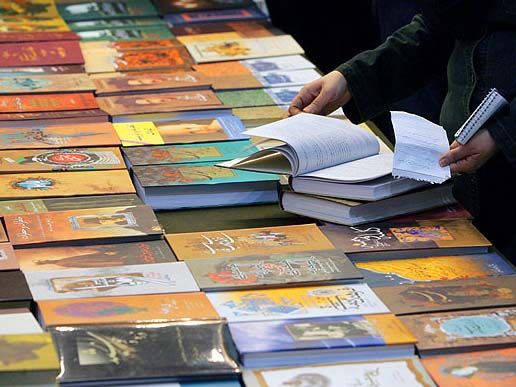
Books During recent years, there has been a systematic and organized effort in Iran to publish many polemics and attacks against the Baha'i community of that country.  Much of this effort is funded lavishly by the central administration in Tehran and approved by the national parliament, which has a specific budget line for "combating the Baha'is", and devotes millions of dollars each year to fund this work.  Many seminars, public talks and conferences are held throughout the country to acquaint the population with ways to confront the Baha'is, and, under the guise of "scholarship", to maliciously undermine, belittle and completely misrepresent the Baha'i teachings.  During the same period, over 80 books, hundreds of monographs and at least an equal number of articles in high-circulation newspapers and journals have been published against the Baha'i Faith, always completely twisting or simply falsifying Baha'i history, origins, teachings, aims, administration, community life, and every other aspect of the Baha'i movement. 

Well-funded research groups with access to significant -resources are devoted to this work, and advanced degrees are offered to those who contribute to this body of polemical literature. Actually, the sheer extent of this polemical literature which has no basis in reality, the cost of producing it and the time and money involved in training people to transmit it are in themselves considerable testimony to the extent to which the clerical class of Iran feels threatened by the Baha'i Faith, which has no clergy.  (Iran Press Watch has previously reported on many of these attacks.)

In an atmosphere poisoned by this massive intellectual and psychological warfare against the Baha'i community of Iran, the Baha'is are absolutely banned from responding ‑ the slightest attempt to publish a response is met with a harsh response by the central authorities, often involving a prison sentence, beating, expropriation of property and sometimes much worse. 

Against this backdrop, Iran Press Watch notes the following significant anti-Baha'i publication, as reported by the Shabestan site, which appears below in translation:

A compact CD by the name of Besuy-e Haqiqat [Towards the Truth] and under the title "Rejecting the Wayward Sect of Baha'ism" has been published and disseminated by the Endowment and Humanitarian Organization of Isfahan's Seminary.

According to the Shabestan news outlet, this compact CD contains 313 books and articles in Persian and Arabic.  The Persian library of this CD has 285 books and articles in Persian under five sections:  (1) Beliefs includes 47 books and articles; Stories includes 13 books and articles; Deduction includes 51 books and articles; and Rejection and Critique includes 63 books and articles.

Among the features of this software are the following:  index to all books and articles, advanced search in the body of published texts or footnotes, attractive pictures and beautiful posters, a utility to print individual pages and copy materials to Notepad, and diverse setup environments.

From the above report, it is evident that such a massive effort to produce materials against the Baha'i community is only intended to turn public opinion against the Baha'is and to provoke national sentiment against this minority community.

[Posted on Monday, August 31, 2009, at Shabestan News. Translation by Iran Press Watch.]


Monday, August 24, 2009

A month after arrest, prisoner's location still undisclosed


Two disturbing reports of unnanounced arrests of three Baha'is in the region of Mazandaran.

Worrisome Situation of an Imprisoned Baha'i

Posted: 21 Aug 2009

Qaemshahr The following is a report by Human Rights Activists News Agency which appears below in translation:

Despite being arrested more than a month ago, there is no news about whereabouts of a Baha'i resident of Qa'emshahr.

While at work, Sohrab Laqa'i, a Baha'i resident of Qa'emshahr, in the province of Mazandaran, was arrested in the afternoon of July 8 by agents of the Ministry of Intelligence who produced no warrant for his detention. However, in all these days, Mr. Laqa'i has had only a very short conversation with one of his children, though no mention was made of his whereabouts or conditions under which he remains incarcerated.

In response to many inquiries by his family from the local judiciary or security authorities regarding Mr. Laqa'i's condition, whereabouts or charges against him, no specific or convincing answers have been given. The vary fact that authorities remain evasive about this case has given considerable worries to the family.

It should be mentioned that Mr. Laqa'i's resident was raided and searched more than a month ago by agents of the Ministry of Intelligence, who confiscated his computer, CDs and books.

[Posted on Wednesday, August 19, 2009, at hra-news. Translation by Iran Press Watch.]


Mother and Son Arrested

Posted: 22 Aug 2009

According to Television Washington online site, on Tuesday, August 4, 2009, agents of the Ministry of Intelligence in the town of Sari, in northern Iran, arrested Mrs. Vesal Yusufi, a 38-year old resident of the village of Mahforuzak, in the vicinity of Sari, along with her 18-year old son, Payam Yusufi. Agents produced no court order or warrant for this arrest, and used extremely offensive language and abusive behavior in the course of this conduct.

The two Baha’is were taken to an unknown destination.

Mrs. Yusufi’s sister has stated that the agents searched their home and confiscated religious books and pictures, and also personal items.

According to Television Washington site, there is no news of this mother and son after their arrest and their whereabouts remains unknown.

[Posted on Saturday, August 8, 2009, at Television Washington. Translation by Iran Press Watch.]

From Iran Press Watch

Friday, August 21, 2009

9-volume history of Baha'i Faith published (in Persian)


Tarikh Zuhuru'l-Haqq Published Electronically

Posted: 20 Aug 2009

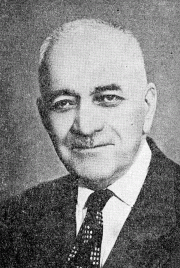
Mazandarani Iran Press Watch is pleased to learn that the first two volumes of Mirza Asadu'llah Fadil Mazandarani's magisterial history, titled Tarikh Zuhuru'l-Haqq, have been typed, edited and annotated by Adel Shafipour and published online.  Mr. Shafipour has given permission to Iran Press Watch to host these two volumes.

Mazandarani was a profoundly learned Baha'i of the time of Abdu'l-Baha and Shoghi Effendi.  He composed and published several dozens of books that are of immense interest to scholars of the Babi and Baha'i movements.  Among his projects was a 9-volume series on the history of these twin movements, which he commenced during Abdu'l-Baha's ministry and completed in the 1950s prior to his passing.  This unique record of the events associated with the rise and establishment of the Babi-Baha'i community was based almost exclusively on primary source documents (i.e. eyewitness accounts) and other solid documentation, and represents the largest single writing project of these two religions. 

Of the 9 volumes, only volume 3 has previously been published in print.  There is an e-version available on H-Bahai, but this version is a scan photocopy and is quite inferior to the completely re-typed and annotated version.  Mr. Shafipour is continuing his work and over time all 9 volumes will be made available online in this form.

Since these volumes represent a peerless documentation of the trials and persecution of the Baha'i community of Iran, they are being posted at this site as a way of fleshing out our academic records.

Mr. Shafipour is warmly thanked for this singular contribution to the field of the Babi-Baha'i scholarship.  His project can be accessed at: http://adelsh09.googlepages.com/home

Tarikh Zuhurul-Haqq, vol. 1

Tarikh Zuhurul-Haqq, vol. 2