Monday, June 7, 2010

Imprisoned Human Rights Activist Demands Respect, is Granted Release


The prison experiences of Navid Khanjani, champion of equal educational rights for Iranian citizens. Read the full article here. 

The Interrogation of Navid Khanjani

Posted: 05 Jun 2010

The Interrogation of Navid Khanjani
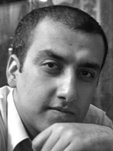
Navid Khanjani, after his release from prison.

Navid Khanjani, after his release from prison.

(CHRR, 3 June 2010) – Navid Khanjani is a founding member of PCED (Population of Combat against Educational Discrimination, an Iranian advocacy group defending educational rights) as well as a member of CHRR (Committee of Human Rights Reporters, an Iranian human rights group). He has been banned from continuing his university education because of his Baha'i faith. Khanjani was arrested in Isfahan on March 2, 2010, before being moved to Tehran a day later, where he was placed in Ward 2A of the IRGC run Evin Prison. On May 3, 2010, Khanjani was released from Evin Prison after posting bail. The following is the English translation of an interview with Navid Khanjani conducted by PCED, where he explains in detail the illegal and inhumane interrogation methods that were used by intelligence authorities and the IRGC to force him into making televised confessions. 

Editor's note: CHRR stands for: Committee of Human Rights Reporters, an Iranian human rights group PCED stands for: Population of Combat against Educational Discrimination, an Iranian advocacy group defending educational rights HRA-Iran stands for Human Rights Activists in Iran, an Iranian human rights group.


First of all, Mr. Khanjani, were you ever indicted during your detention, and, if so, could you elaborate on the charges that were leveled against you?


Yes, I was indicted 3 days after my arrest. I was arrested on March 2, and on March 5, I was taken before Mr. Kiamanesh at the 3rd unit of the Evin magistrate court. I was indicted for anti-regime propaganda activities, anti-national security actions through active membership in human rights groups (HRA-Iran), and having ties to the MKO through the intermediary of HRA-Iran. ...


Mr. Khanjani, during your detention in Ward 2A, were you ever placed in solitary confinement, and, if so, can you tell us for how long and under what conditions?


Yes, I arrived at Evin's Ward 2A on March 3, where I remained in solitary confinement until March 26. During that time, my cell was changed on 2 occasions. The first solitary cell was very small and did not have a toilet.

I was moved to another cell that had washroom facilities after I went on a hunger strike to protest my unlawful detention and the deplorable conditions of the cell. Between March 26 and May 3, I was held in a cell which I shared with 2 other prisoners, Ighan Shahidi and Sama Nourani, both of whom are Baha'is who have been deprived of a university education. I have to emphasize that my hunger strike was not only in protest to the conditions in the solitary cell, but I also wanted all my rights as an accused to be respected; it was in protest to the first day of my interrogation, during which I was blindfolded and beaten; it was in protest to my beating by the Ward 2A IRGC guard, as well as the deplorable conditions of my solitary cell. I wanted to be allowed to call my family and tell them that I was being held in Evin. On the second day of my hunger strike, my condition deteriorated, and I was taken to the infirmary. I ended my hunger strike, following the advice of the doctor and the officer on duty. Eventually, all my demands were met, and I was allowed regular phone calls. I was also moved to another cell, and my interrogator was replaced with someone who treated me in an acceptable way and conducted the sessions without blindfolding me.

Overall, I achieved my goals, and my rights as an accused were largely respected from there on.


You talked about beatings. Can you elaborate on these beatings during the detention? Do you believe that you were tortured?


Regarding the beatings, I have to say that, on the first day of my interrogation, I was beaten, insulted and cursed by the interrogators while I was blindfolded. I received blows to my shins and sides. The same day, I was severely beaten by one the guards, who pounded my head against the wall and tried to strangulate me. Later on, after my interrogator was replaced, the beatings stopped and I was treated acceptably by the new interrogator and the guards. With the exception of the guard who beat me the day of my arrival, the rest of them acted reasonably legally. Then, in mid-April, they started talking about a TV documentary and asked us to speak in front of a camera. My 2 cellmates and I refused to comply. I was assaulted in the prison yard later for not appearing before a camera and was told that I would be spending the next 6 months in solitary confinement. As to your question about whether I believe that I was tortured during my detention, I have to say that torture is not strictly physical; often, psychological torture is far worse. I have described my treatment and the events, and it is up to your readers to draw their own conclusions.


You mentioned that you were being forced to appear in a TV documentary. Can you clarify?


My interrogator... kept insisting that everyone must appear and talk in front a camera, that this was part of the normal procedures and that the films of our remarks would not be broadcast on television. I, for my part, kept refusing... It was in mid-April that they came to our cell and gave us (myself and my 2 cellmates, Ighan and Sama) a haircut and shaved our beards....

I was taken to [an] interrogation room... It was a clean, furnished room and there was a camera in front of a red chair. The backdrop was comprised of curtains and other fabrics.

They gave me a T-shirt to put on, taking away my prison uniform, and said, "Now you have to answer our questions." I did not say a word in response to their questions. When they saw that their efforts were yet again to no avail, they took me out of the room. I was then escorted to the prison yard, where someone called out my name, saying, "Khanjani, go and stand next to Nourani and face the wall." I had my blindfold on, and therefore could not see anything while I was standing next to Sama Nourani. Then, all of a sudden, I felt that I was being choked.

Someone was trying to strangulate me. When I started to asphyxiate, he then pounded my head against the wall... After they lifted me up, they started cursing and slapping me... During that time, the only thing I did was to laugh, as he kept beating and insulting me. Finally, in contrary to what they had promised, I was not taken to solitary confinement, but to my cell with Ighan and Sama. The entire TV interview charade was never mentioned again, and my interrogator was very upset when he learned about my beating. He asked me about it and promised to follow up and reprimand the person who was responsible for it. He said that he did not know about it and regretted that it had happened.


Source: Committee of Human Rights Reporters, CHRR, English, Persian


Wednesday, May 19, 2010

On the alert: US Government calls on Iran to meet International Obligations

 
From Iran Press Watch.
US condemns Iran for imprisoning Baha’is
May 16th, 2010 

US condemns Iran for imprisoning Baha’i[s]

(AFP) WASHINGTON — The United States denounced Iran on Friday over its detention of seven leaders of the Bahai religious minority who have been held for two years
  • The United States “is deeply concerned about the ongoing persecution” of both Bahais and other religious minorities in Iran, State Department spokesman Philip Crowley said in a statement.
    On the second anniversary of the detention of seven Bahai leaders, he said, “the United States strongly condemns their continued incarceration as a violation of due process.”
    Washington “calls on Iran to meet its obligations under the International Covenant on Civil and Political Rights,” he added.
Read full story from source: AFP, http://www.google.com/hostednews/afp/article/ALeqM5iuC07fuBy5JEVwnuFUsaF5F0P-Cw
in Arabic, here: ELAPH, http://www.elaph.com/Web/news/2010/5/561295.html
 

Wednesday, April 21, 2010

Young Baha'is - harshly imprisoned - allowed meeting with families

 
From Iran Press Watch.

Posted: 18 Apr 2010

Navid Khanjani
Navid Khanjani

RAHANA - On Thursday April 15, the families of Navid Khanjani and Dorsa Sobhani were allowed to visit their children in prison. According to the Edu-right.us, the families of education-deprived students Dorsa Sobhani and Navid Khanjani were able to receive permits for in-person visits after following up their request at the prosecutor's office and visiting the prosecutor. Navid Khanjani was described to be in [good?] physical and emotional condition during this visit; however, Dorsa Sobhani was not in good physical condition. Navid Khanjani is a co-founder of Population of Combat against Education Discrimination and a key member of Committee of Human Rights Reporters (CHRR). He was arrested on March 2, 2010 in Isfahan, then transferred to the IRGC-controlled ward inside Evin prison in Tehran. He has been reportedly under lengthy and intense interrogations to accept heavy charges.
A few days after his arrest, pro-government media released news titled "Members of Organized Cyber War Networks Arrested", in which they had mentioned Navid Khanjani's name along with other members of the CHRR as key convicts of that case. This incidents has raised concerns about "creating a security case" against him and other arrested Baha'i students who have been banned from education.
Dorsa Sobhani was arrested on March 7, 2010 at her house in the city of Sari in Mazandaran province. In an earlier, short phone call, Sobhani had notified her family that her "interrogations were over"; however, after 40 days there is still no information available regarding the reason of her arrest, and neither her nor Navid Khanaji's lawyer has had any access to their clients' files.


Source: RAHANA, 15 April 2010   http://www.rhairan.info/en/?p=2606,

Thursday, March 4, 2010

Another prominent human rights reporter arrested in Iran

 
Among the number of stories appearing each day about the persecution of Bahá'ís and rights activists alike in Iran, here is yet another vivid example of the lengths to which the Islamic Republic will go to silence every significant voice of protest against the atrocities being perpetrating against its people.

From Iran Press Watch.


CHRR Member Navid Khanjani Arrested

Posted: 03 Mar 2010

Committee of Human Rights Reporters (CHRR) – Student and civil activist Navid Khanjani was arrested at his home in Isfahan on March 2, 2010.

arton8701
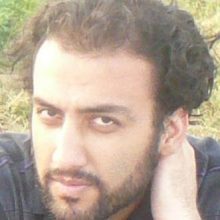
Navid Khanjani
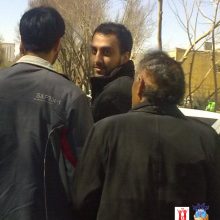
Navid Khanjani Navid Khanjani close to Nikbakht Court as he bids farewell to his family and being taken to Evin Prison (Wed 3 Mar. 2010)
According to reports, around 11:30 pm, six security forces searched his home and confiscated his personal belongings, including his computer. Security forces had brought Navid’s sentence from the Revolutionary Court along with them.

The forces informed Navid that he will be taken to Nikbakht court in Isfahan and transferred to Evin prison tomorrow.

Navid Khanjani is a member of the Committee of Human Rights Reporters and founder of Population of Combat against Educational Discrimination. He is regarded as a significant figure in educational rights awareness.

Additionally, due to his belief in the Baha’i faith, Navid Khanjani was banned from continuing his education.

Currently there are a total of seven CHRR members who are detained. The names of detained CHRR members are: Shiva Nazar Ahari, Koohyar Goodarzi, Navid Khanjani, Saeed Jalalifar, Saeed Kalanaki, Saeed Haeri, and Mehrdad Rahimi

Source: CHRR: English, Persian;

Pictures from: http://www.schrr.net/print.php?articleid=8701

Source: http://www.iranpresswatch.org/post/5772
 

Wednesday, March 3, 2010

Life as a Baha’i in Semnan: the case of Mr Hedayati


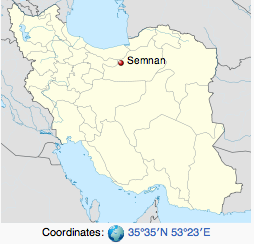
Semnan, Iran: The small city is a fertile breeding ground for anti-Baha'i activities

Posted: 01 Mar 2010

Semnan, Iran

Semnan, Iran

[Editor: Semnan seems to be a testing ground of systematic anti-Baha'i activities in form of persecution, arrests, refusal to education, and refusal of all community life including burial. Iran Press Watch has carried many stories covering these actions against the Baha'is in Semnan.]


RAHANA – Semnan, known for its carpets and textile industry, is a small city at the southern foot of the Alborz Mountains in Northern Iran. The small city is also a fertile breeding ground for anti-Baha'i activities, and the anonymity prevalent in larger cities is non-existent. Members of the city's Baha'i community are regularly harassed, their houses and businesses set on fire, and their cemetery desecrated by unidentified gangs – gangs that walk away unpunished and unprosecuted by the authorities. For their part, city and government authorities have not stopped bullying the Baha'i community, with tactics ranging from flat-out arrests and day long interrogations to refusal to issue burial permits for the deceased members of the community.
No one knows the scope of the difficulties of life as a Baha'i in Semnan better than Yahya Hedayati, who has spent over 4 years of the past decade in prison in Semnan and Tehran. His family members have not been immune to the persecution, either; the authorities after him held his father, and Hedayati's wedding had to be delayed until after his release. These are a just a few chapters of his life.
As recently as two weeks ago, his house, along with the store of another Baha'i resident, Akbar Pour Hosseini, was set on fire in the middle of the night by arsonists. The fires caused damage to the properties, and the two men plan to pursue the matter with the authorities.
Between April 9 and May 24, 2009, Mr. Hedayati's house was attacked in the middle of the night on 8 separate occasions by unknown assailants riding on motorcycles. The incidents terrorized Mr. Hedayati's family members and often involved rocks being thrown at his windows. His car's windshield was shattered on April 22, and the note left by the culprits cited his Baha'i faith as the reason for the attack. Mr. Hedayati has written to many officials, including the Prosecutor General, Dori Najaf Abadi, to complain about his treatment.
As for Mr. Pour-Hosseini, he has had his fair share of unpleasant past incidents. Prior to the recent arson and during the Ashura and Tasoa ceremonies – two of the most important mourning days for Shiites – his store windows were broken and his store sign was vandalized. Last summer, arsonists set fire to his shop and watched as the fire immolated and nearly destroyed Mr. Pour-Hosseini's workplace.
In other news, city officials refuse to issue a burial permit for Ms. Nabili, a Baha'i resident who died two weeks ago.
 
Wikipedia article on the city of Semnan: http://en.wikipedia.org/wiki/Semnan_(city)
 

Tuesday, February 23, 2010

New tv series on Iran state network grossly misrepresents history, tenets of Bahá’í Faith

 
GENEVA – BWNS (Persian)

Bahá’ís deplore portrayal of their Faith in new tv series on government-owned Iranian national network

12 February 2010

Bahá’ís deeply deplore the malicious portrayals of Bahá’u’lláh and the Báb, the Twin Prophet Founders of the Bahá’í Faith, in a new national Iranian television network series. The characterizations degrade, ridicule, and insult these Central Figures of the Bahá’í Faith, Who are revered by Bahá’ís worldwide. The broadcast of this series is all the more lamentable in the face of the government’s loud denunciation of religious defamation in international forums.

The series, titled “Salhaye Mashrooteh” (“The Years of the Constitutional Revolution”), began on 1 February to coincide with the beginning of the ten-day celebration in Iran of the anniversary of the Islamic revolution, is being aired daily and will conclude on 15 February.

It purports to present a factual historical account of Iran’s “Constitutional Revolution” in the late 19th-early 20th centuries, a period which coincides with the establishment of the Bahá’í Faith in that country. The programs purvey timeworn and wholly unfounded allegations that the Bahá’í Faith was created by British imperialists as an anti-Islamic movement.

This current national network television series is only the most recent occurrence in an unremitting and systematic campaign of propaganda against the Bahá’í Faith by the government of the Islamic Republic of Iran. The campaign has utilized all forms of state-controlled mass media to incite hatred and, suspicion against the Bahá’ís throughout the country by flagrantly misrepresenting, denigrating, and distorting the history and teachings of the Bahá’í Faith.

Iranians eager to learn the truth have no easy access to accurate information about the Bahá’í Faith, as Bahá’ís in Iran are utterly denied the opportunity to correct the slander that is being promulgated by the authorities. Moreover, the mass media is so strictly controlled that even the mere publication of a photograph of the Bahá’í Temple in India in conjunction with an article promoting tourism to that country resulted in the immediate, albeit temporary, closure of the newspaper concerned.

Bahá’ís call upon their well-wishers to join them in seeking to counteract the falsehoods being spread by the government through wide circulation of accurate information about the Faith’s teachings. For those eager to assist in this process, the book titled “Tolouie Digar” and posted at: http://www.aeenebahai.org/node/835 and in audio version at http://www.aeenebahai.org/node/616, is offered as a reliable resource.

Source is at http://news.persian-bahai99.info/story/196. English version distributed by the National Spiritual Assembly of the Baha'is of the United Kingdom in e-mail letter dated 17 February 2010.
 

Monday, February 22, 2010

FRANCE: Company of Academics, Professionals Appeal to Iran Supreme Leader on Behalf of Bahá'ís

 
From Iran Press Watch.

LeMonde.fr

Appeal to Ayatollah Sayed Ali Khamenei, Supreme Leader of the Islamic Republic of Iran

February 21st, 2010
Appeal to Ayatollah Sayed Ali Khamenei, Supreme Leader of the Islamic Republic of Iran

Le Monde, February 5, 2010

Seven Baha’is are at risk of the death penalty in Iran today. In detention for 20 months, these five men and two women, ranging in age from 36 to 72 years, have been accused by the Iranian judiciary system of committing “corruption on earth” and of being “spies for Israel”. The group of seven, who are known in their community as the “Yaran” or “Friends”, were acting as mediators toward different agencies of the Iranian state at the time of their arrest, trying to mitigate the oppression weighing heavily on the Baha’is of Iran, who have been the subjects of constant harassment by the Islamic Republic for 30 years.
Baha’is, who constitute the largest religious minority in Iran, are considered to be non-citizens and “unprotected infidels”. Easy targets, this peaceful community numbering 300,000 is being accused of causing all the problems which are the result of political and social tensions within the country.
Today, official newspapers are accusing them of being the organisers of the troubles which are convulsing the country, an accusation which is as unlikely as all those that have proliferated for more than a century.
As the trial of the seven “Yaran” approaches, arrests, the desecration of cemeteries, pillaging, and fires destroying the property of Baha’is have multiplied. Complaints registered by Baha’is are ignored. As of today, 48 Baha’is are in prison, and 75 more, awaiting their trials, have been released after having paid exorbitant amounts for bail, or having surrendered titles to property or commercial licenses.
For thirty years, access to university has been denied to them, nor do they have the right to benefit from a pension. They cannot be hired in the public sector, and their employers in the private sector have to request a driver’s license on their behalf. Those who attack them are never questioned legally. The harassment extends to insulting school children participating in flag-raising activities.
You, Your Excellence, have yourself in the past deemed that they must be reduced to “a state of subsistence”.
Baha’is for fifty years have been putting into practice, in Iran and elsewhere, the principles of the equality of men and women and the right to education, and have been expounding, among other tenets, harmony between science and religion. By virtue of this, they are winning growing support among the Iranian population.
We ask that the systematic maltreatment, orchestrated by the reactionary wing of the clergy and the government, cease, that liberty of conscience be recognized in Iran and that these men and women be freed.
Signed:
Rosine Haguenauer, researcher, biology
Aitana Perea-Gomez, researcher, biology
Fethi Benslama, university student psychoanalysis
Malvyne Derkinderen, researcher, biology
Jacqueline Léon, researcher, linguistics
Anne Plessis, university student, biology
Genevieve Bordet, university student, linguistics
Sophie Louvet-Vallée, university student, linguistics
Cecile Sakai, university student, Eastern language and civilization
Anne Cecconello, ecology, urban studies
Jean-Pierre Hourdin, business executive
Michel Volovitch, university student, biology
Sophie Vriz, university student, biology
Jean-René Duhamel, researcher, neurosciences
Anna Montagnini, researcher, neurosciences
Eric Castet, researcher, neurosciences
Juliette Sablier, doctoral candidate, neurosciences
Daniel Diatkine, university student, history and economy
Anouchka Ibacka, linguistics student
Sophia Jomni, teacher, medical-social science
Hélène Kontzler, university student, economy
André Lapidus, , university student, economy
Claire Pignol, , university student, economy
Florencia Sember, doctoral candidate, economy
Catherine Tourre Malen, university student, anthropology
Bruno Hoen doctor at university hospital, infectious diseases
Michel Botbol, psychiatrist
Paul Kessler, researcher, physics
François Gros, honorary professor at Collège de France, biology
Lydie Koch, researcher, physics
Henri Korn researcher, biology
Dominique Schiff, researcher, physics
Gérard Toulouse, researcher, physics
Joyce Blau, university student, Eastern studies
Sonia Dayan-Herzbrun, university student, sociology
Joseph Parisi, researcher, physics
Translation by Iran Press Watch
Source: Le Monde, http://www.lemonde.fr/opinions/article/2010/02/05/appel-a-l-ayatollah-sayed-ali-khamenei-guide-supreme-de-la-republique-islamique-d-iran_1301458_3232.html#ens_id=1190750

Source is here.