Thursday, September 17, 2009

CNN: Columbia professor highlights significance of Baha'is' rights for democracy in Iran


The plight of the Baha'is of Iran - after a century-and-a-half of brutal oppression - is increasingly attracting the serious attention of prominent scholars and enlightened thinkers of in particular Muslim and Christian extraction. Professor Dabashi here argues decisively the need for the peoples of the West to raise insistently their voice in demanding the restitution of the God-given rights of a defenseless, peace-loving minority. Read the original here.
(Excerpt:)
"...the fate of the Iranian Baha'is should not be eclipsed under the cloud of other civil rights abuses [in Iran], for they represent much more than their own small community. ...

"While other religious minorities are specifically protected under the Constitution of the Islamic Republic, this is not the case for the Baha'is.

"Article 13 of the Constitution has specifically and exclusively recognized Zoroastrian, Jewish and Christian Iranians as "the only recognized religious minorities, who, within the limits of the law, are free to perform their religious rites and ceremonies, and to act according to their own canon in matters of personal affairs and religious education."

"The word "only" in this article seems specifically designed to exclude the Baha'is from this clause. ...

The experiences of Muslims as a minority here in the United States, or in Europe for that matter, gives them a unique position to raise their voice against the abuse of non-Muslim minorities in Iran and the rest of the Muslim world. ...

The fate of Iranian Baha'is is not only a matter of their fundamental civil rights in the context of any republic, Islamic or otherwise. It is the very cornerstone of democratic citizenship without which the Muslim majority of Iranians is denied their constitutional protection. Watch the fate of the Iranian Baha'is carefully.

The day they are free to practice their religion without fear, Iranians at large will have finally secured their civil liberties."


When Baha'is are free, then all Iranians will be

Posted: 16 Sep 2009

art_hamid_dabashi Editor's Note: Prof Hamid Dabashi is the author of Iran: A People Interrupted. He is Hagop Kevorkian Professor of Iranian Studies and Comparative Literature at Columbia University in New York. The following commentary appeared on CNN on September 16, 2009.

/world

By Hamid Dabashi

Story Highlights

  • Hamid Dabashi: Seven Baha'is on trial in Iran, perhaps for their lives
  • He says the Iranian regime doesn't support freedom for the Baha'i minority
  • He says Muslim Americans are in unique position to speak out for Baha'is in Iran
  • He says when Baha'is are granted liberty, all Iranians will have civil rights

(CNN) — In their latest communique regarding the fate of seven arrested members of the Baha'i religious minority in Iran, Amnesty International has expressed grave concern they may face the death penalty if they are found guilty of the charges of "espionage for Israel," "insulting religious sanctities," and "propaganda against the system."

As the Islamic Republic of Iran experiences the most serious challenge to its legitimacy in its 30-year history, the vulnerability of religious and ethnic minorities is the most accurate barometer of the crisis that all Iranians face in these dire circumstances.

Of all the various Iranian minorities, the Baha'i community historically has been the weakest and most vulnerable. The world's attention is rightly drawn to the fate of prominent reformists charged with treason, and to the arbitrary arrest, torture, rape and murder of young Iranians. But the fate of the Iranian Baha'is should not be eclipsed under the cloud of other civil rights abuses, for they represent much more than their own small community.

Minorities have always been at the mercy of belligerent authorities, particularly when they face a crisis of legitimacy. Kurds in western Iran, Arabic-speaking communities in the south, Azaris in the north, as well as Turkmans and Baluchis in the east have been at the forefront of such discriminations, which has in turn instigated chronic separatist movements in these areas.

At the same time, Iranian Zoroastrians, Jews and Armenians have also faced varied degrees of discrimination, at official or cultural levels and registers, as they have joined their Muslim brothers and sisters in opposing domestic tyranny and foreign intervention alike.

Among all these minorities, the Baha'is remain the most fragile in part because of intra-Shia sectarian hostilities that go back to mid-19th century and the rise of a vastly popular messianic movement known as Babism, of which the contemporary Baha'is are an offshoot. Its adherents consider themselves the followers of an entirely new religion, in fact the very latest Iranian monotheistic faith with over five million followers scattered over 200 countries.

While other religious minorities are specifically protected under the Constitution of the Islamic Republic, this is not the case for the Baha'is.

Article 13 of the Constitution has specifically and exclusively recognized Zoroastrian, Jewish and Christian Iranians as "the only recognized religious minorities, who, within the limits of the law, are free to perform their religious rites and ceremonies, and to act according to their own canon in matters of personal affairs and religious education."

The word "only" in this article seems specifically designed to exclude the Baha'is from this clause. Having the same effect, Article 14 of the Constitution stipulates the constitutional protection of the minorities to be exclusive to those "who refrain from engaging in conspiracy or activity against Islam and the Islamic Republic of Iran.

The location of the Baha'i holy sites in Haifa, Israel, has been a principal source of harassment and intimidation against the Baha'is. This goes back to the late Ottoman period and obviously predates the establishment of the Jewish state in 1948. It's also something over which the Baha'is have had no control.

Read the reminder of the article at CNN

Saturday, September 5, 2009

Powerful video (2 min) by Muslims in defense of Baha'is' rights


The Muslim Network for Baha'i Rights impresses yet again with an excellent, stirring video that speaks out for justice for Irans people in general, and for its Baha'i minority in particular. The dynamic, transformational force that this Network represents bodes well for the influence that enlightened religionists can exert on the course of world developments in all parts of the earth!


United for Baha'i Human Rights (text - excerpts)

[T]imes are changing...

And as the world raises its voice for human rights in Iran
We know change can come
We know the power of words
We know our unity.

And we know that
"Injustice anywhere is a threat to justice everywhere."
(Dr. Martin Luther King Jr.)

And so we cry out from the rooftops...
And from blogs, videos and social networks.

Out of our shared belief in justice
For Baha'i human rights
For the people of Iran
For people everywhere.

Be informed. Stay aware.
The Muslim Network for Baha'i Rights
www.BahaiRights.org


About the Muslim Network for Baha'i Rights:
  • The authors are Muslim interfaith activists who are deeply concerned with the treatment of Baha'is within the Middle East. We don't believe in the Baha'i faith, but we respect those who do.
  • We would like to make the general public of the region aware of Baha'i human rights abuses in order to take effective action against the increasingly alarming situation of Baha'is

Latest Video: United for Baha'i Human Rights
We are extremely excited to release our latest video, which has been in the works for quite some time now. As we noted on our timeline, this powerful video (whose chants we used in the background to one of this video's scenes.) abuses against the innocent Baha'i minority in Iran have been committed for over 30 years. Inspired by the reactions of Iran's latest election, where many Iranians took to the streets to demand change and respect for their human rights, we felt that a new video was in order, especially after
To truly explore the amount of abuse the Iranian regime has been committing against the Baha'i minority in Iran, please explore this extensive timeline.
For the past 30 years, followers of the Baha'i Faith in Iran have been lynched, falsely imprisoned, vilified and driven out of their homes. Baha'i children have been deprived of their right to an education, adults have been prevented from earning a livelihood and thousands of families had their properties illegally confiscated by the government.
But the Iranian regime would have us believe that its the innocent party in these circumstances. It continues to deny that it harbors any intentions to eradicate the Baha'i community, while employing all possible means to slander and denigrate the memories of its victims. We need to fight for their human rights.


Source: http://www.bahairights.org/2009/08/31/latest-video-united-for-bahai-human-rights/

Update of recent incidents - arson, random arrests, sentences, imprisonments, intrigue, harrassment

Short Updates

Posted: 28 Aug 2009

The following news items were reported on the Persian page of Baha'i World News Service on August 26, 2009.

Hamadan (BWNS1):

Mrs. Mehrangiz Husayni, a resident of Hamadan, who was arrested last year on October 24, 2008, was convicted and has been sentenced to one year of imprisonment on the charge of "propagation of the Baha'i Faith", commenced her incarceration on August 16. [See IPW1]

Karaj (BWNS2):

The trial of Shahram Safajoo, who was summoned to the Revolutionary Court of Tehran, Branch 28, on August 22, 2009, has been postponed to October 18, which coincides with the anticipated trial of the former Yaran ("Friends" – informal leaders of the Baha'i community of Iran). Mr. Safajoo was arrested on April 26, 2009, after his residence was searched; he was released on bail on May 18. [See IPW2]

Kashan (BWNS3):

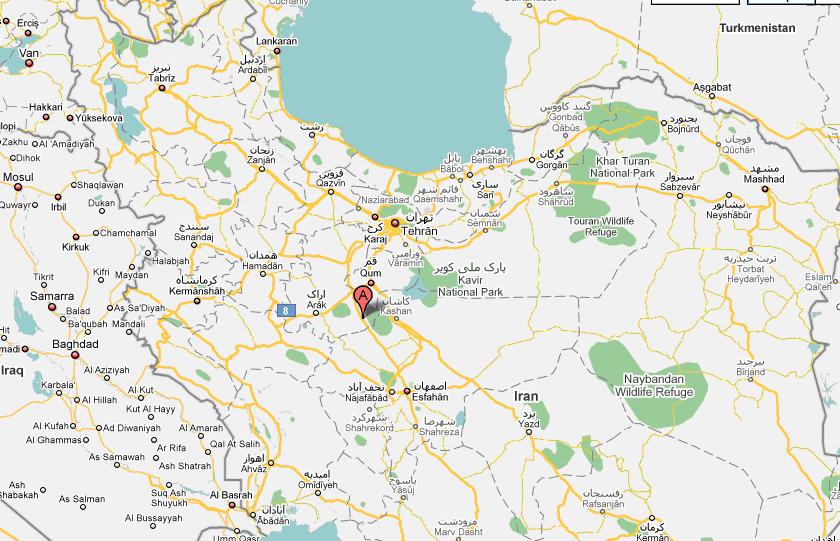
On August 19, Mr. Vahid Haqiqi and his son, Sina, and Mrs. Mona Rouhani – all three residents of Kashan in the province of Isfahan – were summoned to the Ministry of Intelligence in their native town. They were arrested the next day, and released on August 22 after providing bail. [See IPW3]

Qa'emshahr (BWNS4):

Mr. Sohrab Laqa'i, a resident of Qa'emshahr, who was arrested on July 8, 2009, has been allowed only a single telephone conversation with his children ever since. The residence of Mr. Laqa'i was searched by agents of the Ministry of Intelligence on January 4, 2009, along with the homes of four other Baha'is. [See IPW4].

Sari (BWNS5):

On August 18, 2009, agents of the Ministry of Intelligence raided the home of Mrs. Didar Hashemi, a resident of Sari in the province of Mazandaran, and confiscated certain personal items after a search of the home. The agents had a court order for the search of the building, but not for her arrest. They returned the following day and arrested Mrs. Hashemi. [See IPW5]

Yasuj (BWNS6):

Ali-Askar Ravanbakhsh and his wife, Zulaykha [Musavi-]Ravanbakhsh, who are residents of Mehryan, and Mrs. Ruhiyyih Yazdani (Bagha'i), a resident of Yasuj, were given family leave from prison starting on August 11 (see IPW6). The three Baha'is are completing their 4-year prison sentences, of which 2 years have been reduced to 5 years of probation. They were tried and found guilty on charges of "propagation [of speech] against the Islamic Republic" and "participation in the formation and organization of illegal groups". For the first charge they received 3 years, and for the second were sentenced to a one-year imprisonment. [Their sentence commenced October 28, 2008.]

Baha'i Couple on Trial

Posted: 03 Sep 2009

jail The following report was filed by the online site of Human Rights Activists News Agency on Thursday, September 3, 2009:

A Baha'i couple was tried after a year on the charge of promotion of their religion.

On July 29, 2008, security agents went to the home of Fayzu'llah Qanvatian in the town of Ahwaz and after a research of the residence and confiscation of his books and personal items charged this family with "promotion of the Baha'i Faith" and "propaganda against the regime".

At the same time and while still at their home, security agents compelled Mr. Qanvatian and his wife, Mrs. Nushin Ruhani, to answer a series of written questions. They were then escorted to the interrogation office, where bail and surety was arranged for them and they were freed that day pending their trial.

During this past year, the couple have been summoned several more time and interrogated by officers of the Ministry of Intelligence.

The case of this couple was sent to the public prosecutor of the city of Ahwaz. During the court session, the prosecutor asked for maximum penalty under the law. The court then decided to pass the case to the city's Revolutionary Court for adjudication.

On August 31, the said court met and reviewed the case. It then announced that in days ahead it would rule on the merits of the charges and the case before it.

[Posted on Thursday, September 3, 2009, at hra-news. Translation by Iran Press Watch.]

Baha'i Farm Set on Fire

Posted: 29 Aug 2009

Earlier today, the following news was reported by the online site of Human Rights Activists News Agency:

Independent and reactionary elements have set on fire the farm-produce of a Baha'i.

On August 20, 2009, the farm products of Mirza Aqa Fanaian, who is the only Baha'i resident of the village of Darjazin, located 5 miles north of Semnan, was set on fire. These products consisted of barley and hay. Mr. Fanaian is an elderly person and this farm is the sole source of his livelihood and was valued at 10 million rial [equivalent of US$1,000].

The province of Semnan has seen considerable increase in anti-Baha'i activities during the current year by independent and reactionary forces. The Baha'i appeals to law enforcement agencies to prevent these elements from perpetrating these violent acts have not produced any results and have fallen on deaf ears.

[Posted on Saturday, August 29, 2009, at hra-news. Translation by Iran Press Watch.]

Baha'i Sentenced in Sanandaj

Posted: 29 Aug 2009

arton5194 Iran Press Watch has previously reported on the arrest of Mr. Zabiu'llah Raufi, a Baha'i resident of Sanandaj (IPW). Further details are provided by the online site of Human Rights Activists News Agency on Saturday, August 29, 2009:

Mr. Zabiu'llah Raufi, a Baha'i resident of Sanandaj, has been given the sentence of a year imprisonment and exile to the town Minab [near Bandar Abbas in south of Iran].

On August 19, 2009, he was summoned before the Revolutionary Court and arrested at the same time. He continues to be incarcerated. It should be noted that the actual date that the court convened is not known, nor was he provided legal representation, or was there formal legal proceedings. It was at this trial that his sentence was communicated to him.

It should further be noted that in recent days, 18 friends and acquaintances of Mr. Raufi have been summoned to the Ministry of Intelligence of Sanandaj and they have been forced to sign assurances that they would not associate with the family of Mr. Raufi.

[Posted on Saturday, August 29, 2009, at hra-news. Translation by Iran Press Watch.]

Sanandaj

3 Baha'i Prisoners in Sari

Posted: 28 Aug 2009

mom-son-b Editor's Note: The following report was posted on Friday, August 28, 2009, by the Committee of Human Rights Reporters and appears below in translation:

The trial of three Baha'i citizens by the names of Vesal Yusufi, Payam Yusufi and Anvar Moslemi was convened on August 17.

The condition of Mrs. Vesal Yusufi has been reported as most worrisome. She is unable to stand and suffers greatly from pains in her stomach and back. Because of her grave condition, after the repeated insistence of her family during the past several days, the authorities have consented for a physician to see her.

According to various reports, her 18 year old son, Payam Yusufi, has been physically tortured in order to exact from him various confessions and to compel him to sign documents. So far, the files of these prisoners have not been shared with their lawyers and they remain in prison without charges formally brought against them. ... (Read the full story here)

[Posted on August 28, 2009, at: http://chrr.us/spip.php?article5224. Translation by Iran Press Watch.]

Baha'is Arrested in Kashan

Posted: 26 Aug 2009

On Saturday, August 22, 2009, Khabar Navard shared the following news, which appears below in translation:

In a continuation of the widespread arrests of Baha'is throughout Iran, on Wednesday, August 19, 2009, at 12:30 pm, five (5) agents in plain clothes raided the home of Mr. Vahid Haqiqi in Kashan. After they search his residence, agents confiscated his computer, CDs and various religious materials and took both Mr. Haqiqi and his 17-year old son, Sina, into custody. (Read the full story here)

Baha'i Imprisoned in Hamadan

Posted: 25 Aug 2009

On Saturday, August 22, 2009, Khabar Navard shared the following news, which appears below in translation:

In continuation of widespread arrests of Baha'is throughout Iran, Mrs. Mehrangiz Husayni was arrested in Hamadan. According to a court order issued on October 24, 2008, she was sentenced to a year incarceration and on August 16, 2009, was arrested by the security agents and conducted to prison to start her sentence.

The authorities have stated that the charge against her is, "propagation of the Baha'i Faith".

It should be noted that Iran claims freedom of expression for its citizens, but people are not at liberty to express their convictions. What is being charged by authorities against the Baha'is as "propaganda against the regime" is in reality free expression of beliefs and convictions, which Baha'is carry out despite the high cost of imprisonments, fines, and large property or cash bails.

[Source: Khabar Navard. Translation by Iran Press Watch.]

An Arrest in Semnan

Posted: 18 Aug 2009 04:06 PM PDT

Editor's Note: Iran Press Watch regrets that due to the pressure of work it failed to report on an important development in Semnan, as reported through Mihan site on Tuesday, April 14, 2009. For the sake of the completeness of our historical records, that report is now shared in translation:

In mid February 2009, Murteza Hamidi [presumably a Muslim] was arrested by agents of the Ministry of Intelligence in Semnan.

Previously, on December 15, 2008, his home was raided at the same time as the homes of 20 Baha'i families were attacked by agents of the same Ministry in a widespread operation.

The charge against Mr. Hamidi is "possession of Baha'i books and materials", and "relationship with Baha'is". It should be noted that his grandfather is a Baha'i, as are many other members of his family; therefore it is perfectly natural and understandable for Hamidi to have Baha'i printed materials in his possession and to have interactions with Baha'is.

Repeated efforts by his family to secure his freedom have remained futile, and Mr. Hamidi continues to languish in prison without any recourse. The other point that adds to the anxiety of this situation is that Mr. Hamidi and his family have been extensively pressured by the Ministry of Intelligence to file complaints against some Baha'i residents of Semnan for promoting the Baha'i Faith to him and his children. Through this method, the authorities hope to create a legal pretext for further harassment and persecution of the Baha'is of Semnan.

Is this effort not another step in an organized and systematic campaign to eliminate the Baha'is of Semnan? This would then be an effort which could serve as a dangerous and inhumane model for the rest of the nation to entirely eliminate the Baha'is.

[Posted on http://emails.mihanblog.com/post/125. Translation by Iran Press Watch.]

A Baha'i Sentenced to Imprisonment

Posted: 18 Aug 2009

tebyanian (semnan) According to Human Rights Activists News Agency, the Revolutionary Court of Semnan has convicted a Baha'i resident to 18 months imprisonment.

According to the court ruling, Mrs. Susan Tebyanian[-Jabbari], a Baha'i resident of Semnan was convicted to 18 months imprisonment. In the course of her sentencing, the court noted that because of lack of appropriate facilities in Semnan (given her background), one of the prisons in Tehran would be designated for her by the court.

It should be noted her trial took place about a month ago, but the present ruling was issued and communicated on August 12.

[Source: August 18, 2009, hra-news]

The Persian page of the Baha'i World News Service provides further details:

On June 2, 2009, the trial of Mrs. Susan Tebyanian, a Baha'i of Semnan, took place. She had been arrested on April 27, 2009, and released on bail and surety on May 1. The court sentenced her to 18 months imprisonment on the following charges:

  • Formation of illegal groups and societies associated with the Baha'i community under the pretext of "moral training classes"
  • Membership in illegal groups and societies of the Baha'is, such as, "Education Committee", and "Committee for Training and Education"
  • Propaganda against the regime and in support of the Baha'is, such as, local gatherings and associations.

[Source: BWNS. Translations by Iran Press Watch]

A Baha'i Home Searched

Posted: 18 Aug 2009

DelijanAccording to Baha'i World News Service, on July 29, 2009, the home of Mr. Nader Munzavi in Delijan, in the province of Makazi, was searched and his computer and Baha'i books were confiscated. Mr. Munzavi is the sole Baha'i resident of this small town. Last year, he was summoned by the Ministry of Intelligence for interrogations.

[Posted on Tuesday, August 18, 2009, at BWNS. Translation by Iran Press Watch.]

Ayatollah confronts Iranian regime: labels it un-Islamic, condemns injustices


Montazeri Condemns Iranian Regime

Posted: 27 Aug 2009

Montazeri Editor's Note:  Yesterday, August 26, Grand Ayatollah Montazeri issued a proclamation in response to a letter dated August 23 by some 293 Iranian intellectuals, journalists, human rights activists and other concerned citizens.  Iran Press Watch is working on a translation of that proclamation and will post it shortly.  Meanwhile, a description of this remarkable statement was published by Radio Zamaneh, which we share below for our readers' information.

Ayatollah Montazeri, a senior dissident cleric, condemned the government crackdown on protesters after the re-election of Mahmoud Ahmadinejad and claimed: "The authorities should at least have the courage to announce that this regime is neither a republic nor Islamic and no one is allowed to protest, to express an opinion or to criticize anything."

Montazeri's letter, which was in response to 300 activists who had called for the intervention of senior Shiite leadership to resolve the current crisis, was published in Ayatollah Montazeri's Communications Headquarters. In it, Montazeri claims that he has urged the government on several occasions to desist from violence but to no avail. He presses on for the release of all detainees and calls the mass trials of reformists "a travesty of Islamic law."

"Islam," he points out, "is a truly divine religion that in it freedom of opinion and speech are evident and fully transparent…even in the acceptance of this faith, the Quran clearly states that there must be no force or obligation. The way of the Prophet and the Imams was also thus that people in sheer freedom and without any fear of any kind would express their opinions and critique any issue."

Grand Ayatollah Montazeri was a close collaborator of Ayatollah Khomeini in the Iranian Revolution of 1979 and in the government that issued from it. He was set to succeed Ayatollah Khomeini but was put aside over disagreements with government excesses. He was under house arrest for five years for criticizing the government. He now lives in Qom and as a Grand Ayatollah, remains a high authority on Islamic theology and law. He has been a staunch critic of  the Supreme Leader, Ayatollah Khamenei.

The government has tried to silence post-election protests against the disputed victory of Mahmoud Ahmadinejad in June by detaining thousands and violently putting down mass demonstrations. Mass trials of reformist leaders have been set up to parade recanting political activists and televise confessions pointing at a foreign-backed conspiracy to topple the regime. Opposition leaders have denied the charges and spoken out against torture and forceful extraction of confession in prisons.

[Posted on August 27, 2009, at Radio Zamaneh.]


Mona (17), martyred in 1983, keeps attracting eulogies


Yet another eulogy of this steadfast Baha'i youth who was martyred for serving her faith in the capacity of a children's teacher.

They Hanged Her for Teaching Love

Posted: 31 Aug 2009

Mona Editor's Note: The following essay is reprinted from American Thinker and is by Amil Imani, a pro-democracy activist in the United States. Mr. Imani is a columist, literary translator, novelist and essayist, who has been writing and speaking out for the struggling people of his native land, Iran.

By Amil Imani

She is called the Angel of Iran, because she lived her short life angelically. The demonic Islamist Mullahs, true to their nature, couldn't bear an angel in their midst. On June 18, 1983, they hanged the young woman, barely past childhood, for refusing to renounce her belief: the belief in love, justice, and equality for all children of God.

Her name was Mona, a 17-year old Baha'i Character School (Sunday school) teacher. Her pupils loved the indescribably gentle loving teacher who taught them to grow up as exemplary humans with hearts brimming with the love of God, all his people and his creation.

One day the Mullahs' agents came to her house while the young school-girl was studying for her next day English exam. The savage Islamists had another much tougher exam in mind for her to be administered in the horrific prison of the Mullahs. They were certain that they could break the frail young woman under pressure and torture; that they could make her recant her faith and adopt their bigoted creed.

Our great Zoroaster, the luminous ancient prophet of Persia, spoke of the ongoing battle between the forces of good under Ahuramazda-God, and the forces of evil directed by Ahriman-the Satan. Zoroaster warned us not to fall for the enticements or be deceived by the machinations of Ahriman. He further informed us that evil can be recognized by the deeds of its people; people who would oppose the precepts of Ahuramazda.

And the child-woman Mona was seen by the Islamist clergy as a threat to their very demonic precepts and practices. They felt compelled to either convert her to their creed of darkness or extinguish her young life.

Mona, the young teacher, deeply loved children and believed that they had to be brought up as champion workers for Ahuramazda.

Baha'is claim that the founder of their religion, Baha'u'llah, is the reappearance of the spirit of Zoroaster; that Zoroaster's triad teachings of Good Thoughts, Good Speech, and Good Behavior are elaborated in greater details by Baha'u'llah.

Mona's lessons for the children, a detailed exposition of Zoroaster's teachings, are summarized in the passage below by Baha'u'llah.

"Be generous in prosperity, and thankful in adversity. Be worthy of the trust of thy neighbor, and look upon him with a bright and friendly face. Be a treasure to the poor, an admonisher to the rich, an answerer to the cry of the needy, a preserver of the sanctity of thy pledge. Be fair in thy judgment, and guarded in thy speech. Be unjust to no man, and show all meekness to all men. Be as a lamp unto them that walk in darkness, a joy to the sorrowful, a sea for the thirsty, a haven for the distressed, an upholder and defender of the victim of oppression. Let integrity and uprightness distinguish all thine acts. Be a home for the stranger, a balm to the suffering, and a tower of strength for the fugitive. Be eyes to the blind, and a guiding light unto the feet of the erring. Be an ornament to the countenance of truth, a crown to the brow of fidelity, a pillar of the temple of righteousness, a breath of life to the body of mankind, an ensign of the hosts of justice, a luminary above the horizon of virtue, a dew to the soil of the human heart, an ark on the ocean of knowledge, a sun in the heaven of bounty, a gem on the diadem of wisdom, a shining light in the firmament of thy generation, a fruit upon the tree of humility."

Ten Baha'i women of Shiraz, Iran were among the many Baha'is who were arrested by the Islamists for their faith. The young Mona was one of them. These women endured months of endless abuse in the prison of the Mullahs, yet every one of them refused under threat of death to recant their faith of love.

The heartless Mullahs finally decided to make good on their threat and hanged these magnificent human beings, one-by-one. The Angel of Iran was the last to be hanged for she wished to pray for each woman as she was hanged. When Mona's turn came, she kissed the noose and placed it around her own neck with prayers on her lips.

The savage Islamists hanged the magnificent child-woman Mona after a long period of tortuous imprisonment. By killing her, the agents of Ahriman aimed to kill love. But assuredly they can never kill love. They only kill the lover.

Oh, you earthly angels!

You immigrating birds,

Whose only adornment

Is a bed of white feathers!

The innocent children of Iran,

Are wearing your white glowing robe,

And have left the memories of life,

To others!

I see the poor black swallows,

Flying over the ruins of our city!

I see overflowing pain,

Intertwined,

With the hearts of every Persian!

My heart stops palpitating!

My breath starts to dry up!

My faith simply fades away,

And my bed falls silent.

[Posted on August 31, 2009, at American Thinker]


From Iran Press Watch. More on the fate of Mona Mahmudnizhad and her nine fellow martyrs here.

Iranian rights lawyer adamant in face of imprisonment, intimidation


Lawyer spent 10 weeks in prison 'for nothing'

Posted: 01 Sep 2009

Soltani Editor's Note: Iran Press Watch has previously reported on the detention (IPW1) and release (IPW2) of Abdolfattah Soltani, one of the lead lawyers for the imprisoned former Baha'i leaders in Tehran. Today's Los Angeles Times article provides further details that might be of considerable interest to our readers:

By Los Angeles Times

On the 28th day of his detention inside Iran's Evin Prison, he was granted his first family visit.

It was then that he found out that while he had been locked up, his sister had died in a car accident.

Prison authorities offered to let Abdul-Fatah Soltani attend the mourning ceremony.

There was just one condition.

The famed human-rights lawyer had to promise that he wouldn't speak out to the media about his incarceration.

He rejected the offer, missing the chance to join his family to grieve for his sister.

"I did not believe I had done anything wrong, so accepting their condition was against my belief and my principles," Soltani, now free, told The Times in an interview at his downtown office a few days ago. "Accepting their condition was a rubber stamp on my non-committed crime."

Instead he vowed to prison authorities that once he was out of prison, he would haul all of them into court, suing them for unjustly locking him up.

Soltani is among Iran's small cadre of human-rights lawyers and is the spokesman for the Center for the Defense of Human Rights, which was co-founded by the Nobel Peace Prize-winner Shirin Ebadi.

Read full article at Los Angeles Times


A Positive Development

Posted: 27 Aug 2009

Earlier today, Thursday, August 27, 2009, BBC Persian reported that Abdolfattah Soltani was freed from incarceration in Evin prison after enduring more than two months of imprisonment, of which 17 days was spent in solitary confinement. In an interview with BBC following his release, Mr. Soltani reported that charges against him are: “instilling doubts in elections”, “propaganda against the regime”, “formation of groups to undermine national security”. He characterized these charges as unfounded in the law and untrue.
He added that the first of these charges were conveyed to him after 27 hours of imprisonment, but Mr. Soltani insists that such a charge is completely spurious as there is no penalty under law for “instilling doubt” in elections. Furthermore, he indicated that as a human rights advocate, he had not participated in any of presidential campaigns nor represented any of the candidates.
Mr. Soltani indicated that the prosecutor had moved quickly, presumably on the strength of his wife’s open letter (see Iran Press Watch), to provide him with temporary release on a 100 million tuman [equivalent of US$100,000] bail in form of property surety.
He stated, “On June 16, four agents entered my office without having a warrant and showed me a court order dated, June 10, that is, two days before the election, which had to do with the unrest in streets and had nothing to do with me.”
“I spent the first 17 or 18 days of incarceration in solitary confinement and for two weeks was deprived of using showers, nor had any means of communications or access to newspapers or books.”
Mr. Soltani was not tortured or subjected to other inhumane treatments that commonly take places in Iranian prisons. However, he indicates that once he entered the common prison facilities, many other prisoners reported that they had been tortured or beaten or otherwise physically mistreated.
In denying any wrongdoing and referring to charges against him as baseless, Mr. Soltani noted that four years ago, he was imprisoned for seven months but was released when all charges against him were proven to be unfounded.
[Based on BBC Persian. Translation by Iran Press Watch.]

From Iran Press Watch

Call by law Professor to ban Iranian officials from visiting Canada


Ban Iranian Leaders from Canada

Posted: 02 Sep 2009

payam-akhavan Editor's Note:  The following essay by Prof Payam Akhavan appeared on September 2, 2009, in National Post and is reproduced in part below for the readers for Iran Press Watch.

By Payam Akhavan

In the aftermath of the brutal repression of peaceful pro-democracy demonstrations in Iran, the evidence of systematic murder, rape, torture and unlawful detention of thousands of protestors continues to accumulate. Under international law, these large-scale atrocities constitute crimes against humanity for which the relevant Iranian officials bear individual criminal responsibility. How should Canada and the international community respond to a regime with such an appalling disregard for the human rights of its citizens? A first step is to recognize that leaders ordering or tolerating such atrocities are international outlaws who should be denied admission to Canada and other democracies.

The numerous horror stories emerging from Iran confirm a consistent pattern of extreme violence against those detained for participating in the protests. A severely traumatized 15-year-old boy recounts how he was arrested for wearing the green wrist-band of the opposition, and subjected to savage beatings, sexual humiliation and gang-rape for 20 days. Another youth describes the condition of his 24-year-old friend Amir Javadifar, who was arrested during the protests and tortured to death in custody: "He had a fractured skull, one of his eyes was almost crushed, all the nails on his toes had been extracted and all of his body was bruised." Alas, there are now hundreds and hundreds of such accounts by victims and witnesses despite the censorship and intimidation of the regime.

There is little doubt that such abuses are part of a state-sanctioned policy of terrorizing supporters of the "Green Movement" that challenged President Ahmadinejad's electoral victory in June. While 100 protest leaders are prosecuted in a farcical show trial and accused of a "foreign conspiracy," nobody has been prosecuted for the heinous crimes against thousands of prisoners. One of the senior judiciary officials assigned to investigate these allegations is the notorious henchman, Saeed Mortazavi, implicated in the murder of Canadian photojournalist Zahra Kazemi in July 2003 and in the torture of many others. Not surprisingly, he has dismissed reports of abuse as baseless. Another senior pro-regime figure has gone even further and called for the punishment of those who dare to expose these abominations. After reformist leader Mehdi Karroubi publicly stated that "female detainees were raped savagely" in prison, Ayatollah Ahmad Khatami declared that Karroubi "deserves to be punished for libel."

Read the rest of article at National Post