Saturday, September 5, 2009

Vigorous publishing activity of works attacking Baha'i Faith


Intellectual and Psychological Attacks against the Baha'is

Posted: 02 Sep 2009

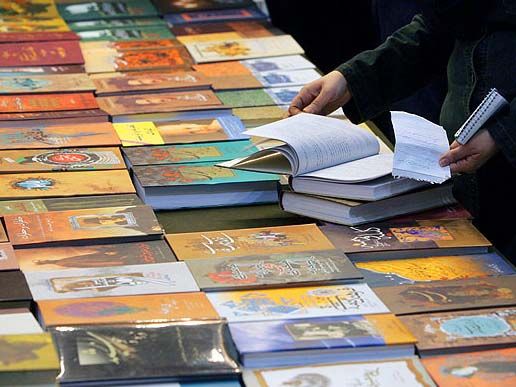
Books During recent years, there has been a systematic and organized effort in Iran to publish many polemics and attacks against the Baha'i community of that country.  Much of this effort is funded lavishly by the central administration in Tehran and approved by the national parliament, which has a specific budget line for "combating the Baha'is", and devotes millions of dollars each year to fund this work.  Many seminars, public talks and conferences are held throughout the country to acquaint the population with ways to confront the Baha'is, and, under the guise of "scholarship", to maliciously undermine, belittle and completely misrepresent the Baha'i teachings.  During the same period, over 80 books, hundreds of monographs and at least an equal number of articles in high-circulation newspapers and journals have been published against the Baha'i Faith, always completely twisting or simply falsifying Baha'i history, origins, teachings, aims, administration, community life, and every other aspect of the Baha'i movement. 

Well-funded research groups with access to significant -resources are devoted to this work, and advanced degrees are offered to those who contribute to this body of polemical literature. Actually, the sheer extent of this polemical literature which has no basis in reality, the cost of producing it and the time and money involved in training people to transmit it are in themselves considerable testimony to the extent to which the clerical class of Iran feels threatened by the Baha'i Faith, which has no clergy.  (Iran Press Watch has previously reported on many of these attacks.)

In an atmosphere poisoned by this massive intellectual and psychological warfare against the Baha'i community of Iran, the Baha'is are absolutely banned from responding ‑ the slightest attempt to publish a response is met with a harsh response by the central authorities, often involving a prison sentence, beating, expropriation of property and sometimes much worse. 

Against this backdrop, Iran Press Watch notes the following significant anti-Baha'i publication, as reported by the Shabestan site, which appears below in translation:

A compact CD by the name of Besuy-e Haqiqat [Towards the Truth] and under the title "Rejecting the Wayward Sect of Baha'ism" has been published and disseminated by the Endowment and Humanitarian Organization of Isfahan's Seminary.

According to the Shabestan news outlet, this compact CD contains 313 books and articles in Persian and Arabic.  The Persian library of this CD has 285 books and articles in Persian under five sections:  (1) Beliefs includes 47 books and articles; Stories includes 13 books and articles; Deduction includes 51 books and articles; and Rejection and Critique includes 63 books and articles.

Among the features of this software are the following:  index to all books and articles, advanced search in the body of published texts or footnotes, attractive pictures and beautiful posters, a utility to print individual pages and copy materials to Notepad, and diverse setup environments.

From the above report, it is evident that such a massive effort to produce materials against the Baha'i community is only intended to turn public opinion against the Baha'is and to provoke national sentiment against this minority community.

[Posted on Monday, August 31, 2009, at Shabestan News. Translation by Iran Press Watch.]


Monday, August 24, 2009

A month after arrest, prisoner's location still undisclosed


Two disturbing reports of unnanounced arrests of three Baha'is in the region of Mazandaran.

Worrisome Situation of an Imprisoned Baha'i

Posted: 21 Aug 2009

Qaemshahr The following is a report by Human Rights Activists News Agency which appears below in translation:

Despite being arrested more than a month ago, there is no news about whereabouts of a Baha'i resident of Qa'emshahr.

While at work, Sohrab Laqa'i, a Baha'i resident of Qa'emshahr, in the province of Mazandaran, was arrested in the afternoon of July 8 by agents of the Ministry of Intelligence who produced no warrant for his detention. However, in all these days, Mr. Laqa'i has had only a very short conversation with one of his children, though no mention was made of his whereabouts or conditions under which he remains incarcerated.

In response to many inquiries by his family from the local judiciary or security authorities regarding Mr. Laqa'i's condition, whereabouts or charges against him, no specific or convincing answers have been given. The vary fact that authorities remain evasive about this case has given considerable worries to the family.

It should be mentioned that Mr. Laqa'i's resident was raided and searched more than a month ago by agents of the Ministry of Intelligence, who confiscated his computer, CDs and books.

[Posted on Wednesday, August 19, 2009, at hra-news. Translation by Iran Press Watch.]


Mother and Son Arrested

Posted: 22 Aug 2009

According to Television Washington online site, on Tuesday, August 4, 2009, agents of the Ministry of Intelligence in the town of Sari, in northern Iran, arrested Mrs. Vesal Yusufi, a 38-year old resident of the village of Mahforuzak, in the vicinity of Sari, along with her 18-year old son, Payam Yusufi. Agents produced no court order or warrant for this arrest, and used extremely offensive language and abusive behavior in the course of this conduct.

The two Baha’is were taken to an unknown destination.

Mrs. Yusufi’s sister has stated that the agents searched their home and confiscated religious books and pictures, and also personal items.

According to Television Washington site, there is no news of this mother and son after their arrest and their whereabouts remains unknown.

[Posted on Saturday, August 8, 2009, at Television Washington. Translation by Iran Press Watch.]

From Iran Press Watch

Friday, August 21, 2009

9-volume history of Baha'i Faith published (in Persian)


Tarikh Zuhuru'l-Haqq Published Electronically

Posted: 20 Aug 2009

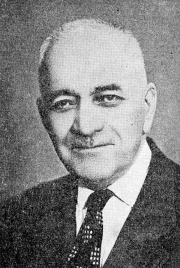
Mazandarani Iran Press Watch is pleased to learn that the first two volumes of Mirza Asadu'llah Fadil Mazandarani's magisterial history, titled Tarikh Zuhuru'l-Haqq, have been typed, edited and annotated by Adel Shafipour and published online.  Mr. Shafipour has given permission to Iran Press Watch to host these two volumes.

Mazandarani was a profoundly learned Baha'i of the time of Abdu'l-Baha and Shoghi Effendi.  He composed and published several dozens of books that are of immense interest to scholars of the Babi and Baha'i movements.  Among his projects was a 9-volume series on the history of these twin movements, which he commenced during Abdu'l-Baha's ministry and completed in the 1950s prior to his passing.  This unique record of the events associated with the rise and establishment of the Babi-Baha'i community was based almost exclusively on primary source documents (i.e. eyewitness accounts) and other solid documentation, and represents the largest single writing project of these two religions. 

Of the 9 volumes, only volume 3 has previously been published in print.  There is an e-version available on H-Bahai, but this version is a scan photocopy and is quite inferior to the completely re-typed and annotated version.  Mr. Shafipour is continuing his work and over time all 9 volumes will be made available online in this form.

Since these volumes represent a peerless documentation of the trials and persecution of the Baha'i community of Iran, they are being posted at this site as a way of fleshing out our academic records.

Mr. Shafipour is warmly thanked for this singular contribution to the field of the Babi-Baha'i scholarship.  His project can be accessed at: http://adelsh09.googlepages.com/home

Tarikh Zuhurul-Haqq, vol. 1

Tarikh Zuhurul-Haqq, vol. 2


Aggressive agents search house, abduct Baha'i woman to unknown location


A Baha'i Woman Arrested in Sari

Posted: 20 Aug 2009

The following report was posted at the online site of Human Rights Activists News Agency and appears below in translation:

Security forces have raided and searched the home of a Baha'i resident in Sari and subsequently arrested her.

On the morning of August 18, seven (7) security agents stationed in Sari raided the home of Mrs. Didar Hashemi (24 yrs old), while her husband was not home.  They showed her a court order for her arrest dated August 3.  Afterwards, agents forced their way inside the house and while being very disrespectful towards Mrs. Hashemi, begun to search the residence and confiscate various religious books and pictures.  Afterwards, they arrested Mrs. Hashemi.

It should be noted that while the security agents were conducting this raid, one of the non-Baha'i neighbors was observing this entire occurrence.  On noting the illegal nature of search and conduct of the agents, the neighbor entered the house and demanded that the agents leave the building and end their illegal activities.  However, this neighbor was confronted with strong reaction of the agents and in less than an hour, the agents brought a new search warrant to investigate the residence of this neighbor and also produced a new warrant for Mrs. Hashemi's arrest which showed a new date.

After Mrs. Hashemi was arrested she was conveyed to an unknown location.

[Posted on Wednesday, August 19, 2009, at hra-news.  Translation by Iran Press Watch.]


House of Justice on background to persecutions of Baha'is of Iran

(Excerpt:)

The primary reason why the divines and rulers have, from the inception of the Revelation of Baha'u'llah, arisen to oppose it is that they saw that Baha'u'llah was the Founder of a new community based on equality and social justice and in that society they saw no role or station or position for themselves.

A Profound Statement
Posted: 21 Aug 2009

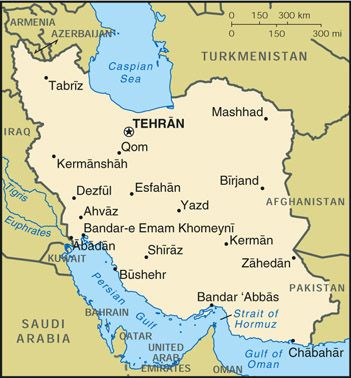
map-iran Excerpts from a statement by the Universal House of Justice written on November 26, 2003 which has far-reaching implications, and remains as true today as it did then. The full text is available here.

The Universal House of Justice
Day of the Covenant, 26 November 2003

To the Followers of Bahá’u'lláh in the Cradle of the Faith

...Ruling elites can make no more serious error than to imagine that the power they have managed to arrogate to themselves provides an enduring bulwark against the relentless tides of historical change. Today, in Iran as everywhere throughout the world, these tides roll in with insistent urgency and tumultuous force. They are not merely at the door of the house, but rise up irresistibly through its floors. They cannot be diverted. They will not be denied.

This is the real reason why Bahá’u'lláh was so desperately opposed by clergy and rulers who recognized in Him — correctly if only dimly — the Voice of a coming society of justice and enlightenment, in which they themselves would have no place. Nor should you have any doubt that it is this same fear that animates the successive waves of persecution you have long endured. Those who investigate the Cause of Bahá’u'lláh with sincerity readily appreciate that the Bahá’í community is a creative minority that is the embodiment of its Founder’s vision of the future and of His indomitable Will to achieve it. Through your love, your sacrifices, your services and your very lives, you have proven to be the true promoters of the progress of your dear homeland of which Bahá’u'lláh has written:

The horizon of Persia hath been illumined with the light of the heavenly Orb. Erelong will the Daystar of the supernal realm shine so brightly as to raise that land even unto the ethereal heights and to cause it to shed its radiance over the whole earth. The imperishable glory of bygone generations shall once more be manifest in such wise as to dazzle and bewilder the eyes….

Iran shall become a focal centre of divine splendours. Her darksome soil will become luminous and her land will shine resplendent. Although now wanting in name and fame, she will become renowned throughout the world; although now deprived, she will attain her highest hopes and aspirations; although now destitute and despondent, she will obtain abundant grace, achieve distinction and find abiding
honour.

Each time we visit the Holy Shrines you are in the forefront of our hearts and prayers. Your long night will end, and you will have the joy of witnessing with your own eyes the mighty structure your sacrifices have raised.

The original Persian text can be accessed here: 2003_1126_uhj_dayofCovenant_P

From Iran Press Watch

Monday, August 17, 2009

Director of Iranian Studies at Stanford addresses situation of Baha'is in Iran

A cogent survey of the historical situation of the Baha'is in Iran by a prominent non-Baha'i academic at a leading University in the United States.
(Excerpt:)
But not all is gloom and doom. In spite of the concentrated efforts of the regime to poison the minds of the Iranian people about the Bahai faith, in spite of its monopoly hold on the media, there is a new surging consciousness amongst millions of Iranians, dozens of intellectuals, and even a handful of Shiite clerics that the treatment of Bahais has been a shameful part of our past. More and more people are convinced that Bahais have, like any other Iranian citizen, the inalienable right to practice their faith, and that as citizens of Iran, they should be entitled to all the rights allotted to any other citizen, from any faith. An impressively large number of Iranian writers, poets, scholars, and filmmakers have come to recognize that as a nation, we owe the Bahais a word of apology, and a debt of gratitude. Apology for all they have suffered, and apology for all our silences; and gratitude that in spite of these inequities, they have invariably abided by the civility and peacefulness their faith professes, but they have never wavered in their love of a free, democratic Iran.

In Support of the Baha'is of Iran

Posted: 15 Aug 2009

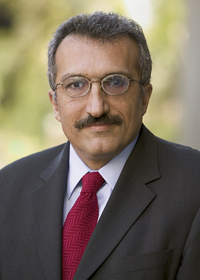
Abbas Milani Editor's Note: Prof Abbas Milani is Director of Iranian Studies at Stanford, where he is the co-director of the Iran Democracy Project. Following if the text of Dr. Abbas Milani's speech at the Herbst Theater in San Francisco as published in The New Republic, on Saturday, August 15, 2009

Editorial Introduction by The New Republic

This Tuesday, seven leaders of Iran's Bahai movement will go on trial on capital charges of espionage and threatening national security. They have been in prison for more than a year. The group's two lawyers have not only been refused the legally required visits with their clients, but neither will be in court on Tuesday. One Abdulfattah Sultani, is in prison on charges of participating in the "Velvet Revolution," while the other, the Nobel Laureate Shirin Ebadi, stands accused by the regime of participating in the same "conspiracy"–but has been fortunately traveling in the West.

For the last few weeks, all around the world, there have been meetings in support of the Bahai Seven in Iran. And last Wednesday, at the San Fransisco Herbst Theater, where the meeting to draft the declaration of Human Rights was once convened, a delightfully multi-ethnic, multi-faith group came to show their concern for the fate of the Bahai Seven and solidarity with the 300,000 Bahais who still live in Iran. Ross Mirkarimi, an Iranian-American member of the San Francisco Board of Supervisors, was among the political leaders who spoke at the gathering. The president of the University of San Francisco offered a few words of prayer to begin the meeting. Here is the text of the talk I gave on that night. I am not a member of the Bahai faith, and like many in the hall, I was there in solidarity with a much persecuted religious minority in Iran.

By Prof Abbas Milani

My name is Abbas Milani, and I stand here as an Iranian contrite and resolute–ashamed for what I consider Iran's disgraceful past in our treatment of our Bahai citizens, and resolute in my determination to say, Never Again, And Never More.

Pogroms were a fact of life in 19th century European Anti-Semitism. In the 20th century they begot the Holocaust. In Iran, there have never been more than a handful of murderous pogroms. But by the 19th century, Iranian Anti-Semites had turned a kind of psychological, emotional pogrom into a sinister art, and tragically, all the subtle and crude techniques of this persecution were turned against members of the Bahai faith, the new bane of Shiite zealots.

One can certainly understand why Shiism, and its belief that its prophet ends the prophetic line, and that the Messiah that must come is none other than its twelfth Imam, might have profound theological tensions with the Bahai faith. But it is a singular requirement of civility in our modern world that we no longer try to solve our theological difference at the point of a gun, or the end of a whip.

But there is also another reason for the obsessive zeal of many Shiites in fighting the Bahai faith. The Bahai's message of peace in contrast to the Islamists' increasing use of violence; the Bahai's promise of gender equality in contrast to a faith where misogyny has long been a way of life; and finally the Bahai's almost Jeffersonian devotion to the principle that in matters of faith there must be neither coercion, nor acceptance by happenstance of birth, but that children born to Bahai parents should at the moment of maturity decide for themselves their own faith in contrast to a state religion that mandates conversion a capital crime, punishable by death–all combine to create a glaring set of contrasts that render traditional Shiism sclerotic. In comparison, their nemesis faith is a harbinger of modernity and its incumbent reformation–a reformation wherein faith is a private matter between men and women and their own notions of the sacred.

Cultures and societies, no less than individuals, are differentiated by how they reckon with what is shameful in their past. Some prefer the false comfort of ignorance. Others are stubbornly obdurate about even accepting the fact that there is something shameful, and still a third group continues to practice and pursue, often with renewed vigor, the very practices and policies that necessitated repentance in the first place. Democratic societies, like healthy individuals, perpetually and critically contemplate their past, uncovering dark moments of injustice or inequity, and moving to end or amend them. For Iran, the treatment of the Bahais in the last 150 years, our society's acts of omission and commission, what we said and did or failed to say and do, all create an embarrassing blot of shame on our history. Iran can't become a democracy unless it has had a full reckoning with its Bahai problem. Iran can't be a democracy unless the Bahais are considered full citizens of the society and their faith–like those of Zoroastrians, Jews, Christians, Muslims, or members of any other faith, belief, or even disbelief– is recognized as a private matter where the state, social institutions, or actors have no right of inquiry, interference, or harassment.

Sadly in our society, as has often happened in the past, one step forward is often, even invariably, followed by two steps back. If Qajar kings reveled in torturing the first generation of converts to Bab; if even the great reformist chancellor of the age, Amir Kabir, spoke to the new converts not in the language of the liberal constitution he so coveted but in the brutal manners of the oriental potentates he so despised; if even the early 20th century Iranian advocates of democratic constitutionalism suddenly forfeited their fervor for equality when it came to granting it to the Bahais of Iran–but a change of some significance happened during the Pahlavi era, particularly during the 37 year rule of Mohammad Reza Shah.

In this period, Iran began to accept the rights of citizenship for Bahais of the country. The relative safe harbor provided by the Pahlavi kings unleashed an impressive burst of creative, industrial, commercial, and intellectual energies and innovations by members of the Bahai community. In writing Eminent Persians–two volumes devoted to the lives of 150 of the country's innovators and industrialists–I was pleasantly surprised at how many of them were members of the Bahai faith. Iran's biggest home appliance industry–more specifically the pioneering work of the Arj Group–the introduction of Pepsi Cola and television by Habib Sabaet, the advent of child and family psychology by Dr. Rasekh, who had been a student of no less a giant than Piaget–are all examples of the immense contribution of members of the Bahai community to Iran's modern development. The Shahyad Arch and Square, now renamed incongruously Azadi or Freedom Square, was the work of a Bahai architect–a young man just out of college who surmounted incredible odds and obstacles to win the biggest architectural competition of his generation. Even after 30 years, the Islamic regime has not succeeded in supplanting this majestic structure, imbued with elements of Iran's hybrid and only partially Islamic culture, as the symbol of Tehran.

And the Bahais accomplished all of this, and much more in spite of constant pressure by the clergy, demanding stricter pressures, even punishments, for members of the community. In 1955 Ayatollah Boroujerdi, the highest Shiite Ayatollah at the time, virtually blackmailed the Shah into organizing the shameful attack on Bahai houses of worship.

Around this time, a nefarious group of Shiite zealots was founded by a clergy named Roghani. The group called itself Hojjatiyeh and it was formed for the specific purpose of parlaying their members' pieties, and their fervent devotion to the twelfth Imam, the Mahdi, into a ruthless obsession against the Bahais. The Hojjatiyeh zealots went so far as to infiltrate Bahai circles only to learn the identities of the members. They became a ruthless force of containment and surveillance of the Bahais under the Shah and a merciless arm of enforcement against members of the faith after the 1979 revolution. On the eve of that revolution, the knowledge the Hojjatiyyeh had so meticulously and unscrupulously gathered over the decades was used to put pressure on members of the faith to either renounce their faith–or in the parlance of the clergy, give up their complicity with a force so sinister that must not be named by its own name but only referred to as that "sinister sect" (Fergeyeh Zalle)–or suffer heartbreaking, and sometimes life-ending consequences. Thousands of Bahais at the time lost their lifetime pensions, houses, businesses and did not submit to the regime's bullying tactic. Today, seven of the leaders of this determined community stand to be tried for "Spreading corruption on Earth" and for being "agents of Zionism," nefarious charges that could each carry the death sentence.

Today, 30 years after the relative enlightenment of the Shah's policies on religious freedom for Bahais and for Jews, a man calls himself Iran's president who long ago learnt his anti-Bahai fervor at the foot of one of his spiritual gurus–Mesbah-Yazdi, the de facto current leader of the "Sinister Sect" Hojjatiye. The marked increase in persecution of the Bahais–persecution that in its scope bears some resemblance to the Racial Laws initially passed in Nazi Germany in 1935–is the direct result of this infamous group's ascent.

But not all is gloom and doom. In spite of the concentrated efforts of the regime to poison the minds of the Iranian people about the Bahai faith, in spite of its monopoly hold on the media, there is a new surging consciousness amongst millions of Iranians, dozens of intellectuals, and even a handful of Shiite clerics that the treatment of Bahais has been a shameful part of our past. More and more people are convinced that Bahais have, like any other Iranian citizen, the inalienable right to practice their faith, and that as citizens of Iran, they should be entitled to all the rights allotted to any other citizen, from any faith. An impressively large number of Iranian writers, poets, scholars, and filmmakers have come to recognize that as a nation, we owe the Bahais a word of apology, and a debt of gratitude. Apology for all they have suffered, and apology for all our silences; and gratitude that in spite of these inequities, they have invariably abided by the civility and peacefulness their faith professes, but they have never wavered in their love of a free, democratic Iran. From Encylopedia Iranica and the tireless work of Professor Yarshater to the brilliant scholarship of professors Banani and Moayyed, they have stood in the vanguard of the effort to show the world that there is an Iran different from the zealotry, bigotry, and brutality of its current rulers–an Iran of Neda Agha Sultans and Goratol-Ayns, the 19th century early convert to Bab, a great poet and scholar and the first woman to lift her veil and give a public lecture in Iran. Let this evening then be the beginning of a new national covenant: Never Again, Never More, Never in the Name of Iran.

[Published in The New Republic on August 15, 2009: http://www.tnr.com/politics/story.html?id=6f52df18-cf88-4fd8-8e94-f4e5c4c1e5aa.]

Severe illnesses of imprisoned Yaran neglected by authorities


Sunday Editorial on the Upcoming Trial

Posted: 16 Aug 2009

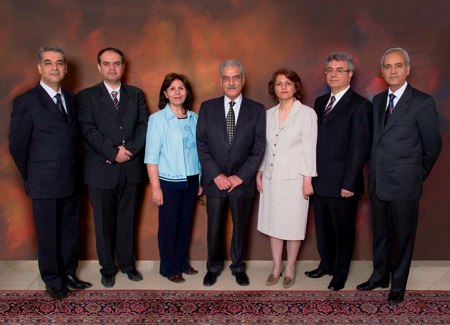
YaranAfter more than a year of incarceration, the situation of the former leaders (Yaran, meaning "friends") of the Baha'i community of Iran appears to be of profound concern.

According to various reports, the seven former leaders of the Baha'i community continue to languish in "temporary" incarceration in a high-security section of the notorious Evin prison, known as section 209.  The seven members are Mahvash Sabet (imprisoned since Mar 2008), and the following who have been imprisoned since May 2008:  Jamaloddin Khanjani, Saeid Rezaie, Fariba Kamalabadi, Vahid Tizfahm, Behrouz Tavakkoli, and Afif Naeimi. 

Pressure on the former Yaran, charged with "espionage on behalf of Israel", "insulting the sacredness of Islam", "propaganda against the regime", and "aiding, teaching and propagating the Baha'i religion in Iran" (tantamount to "mufsed fel-arz" [corrupt on earth] which has historically carried harsh consequences, including the death penalty) includes having had their trial date postponed several times.  The trial is now set for next Tuesday, but could once again be delayed by the authorities.  The imprisoned former leaders have had no access to their attorneys, led by Nobel Peace prize-winner Shirin Ebadi, who is actually out of country.  In fact, their primary lawyer, Mr. Soltani, is himself incarcerated along with many other human rights activists and other civil rights lawyers. 

In addition to psychological pressure, such as routinely renewing the "temporary" imprisonment of the Yaran, or keeping them in a high-security facility which naturally imposes considerable restrictions on the seven individuals, it is reported that their meal portions have now been reduced considerably to the point that their health is at serious risk.  At the same time, prison authorities refuse to permit the families of prisoners to provide the much-needed provisions which would enable them to sustain the brutal conditions of their imprisonment.

Moreover, with the massive arrests of political and civil activists in recent weeks in Iran and curtailment of telephonic contact between prisoners in Evin and the outside world, the families of these prisoners of conscience have become deeply worried about the condition of their loved ones.  The focus on recently imprisoned highly-placed former members of the Iranian regime makes it possible that maltreatment of Baha'i prisoners can take place without incurring significant global outrage.

Based on various reports, Iran Press Watch has been able to prepare the following latest profiles on four of the seven prisoners:


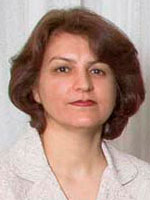
fariba-kamalabadiFariba Kamalabadi has lost a lot of weight and is weak.  She is also losing a great deal of hair.  It is said that every time she pulls her fingers through her hair, a lot of hair comes loose in her hands. 

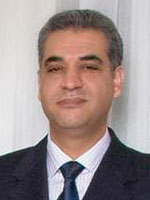
afif-naemiAfif Naeimi suffers from severe backache.  Most of the time, he is lying down, unable to move or sit.  He receives injections of pain killers whenever the pain becomes unbearable.

saeid-rezaieSaeid Rezaie has a hernia and badly needs surgery.  Islamic authorities have not allowed him time off from prison for the operation, but the authorities offered to operate on him in prison.  Considering the lack of necessary equipment and the high fatality record of those who have had surgery at Evin, he and his family refused the offer.  As punishment for not agreeing to be operated on in the deplorable conditions of Evin, he was denied his short weekly visitation with his family for a long time.  He also receives pain killer injections whenever the pain from his hernia becomes unbearable. 

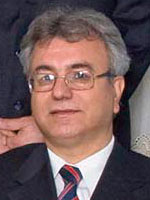
vahid-tizfahmVahid Tizfahm, the youngest of the former Yaran, is losing his eyesight.  The doctor has confirmed that this is due to his severely stressful conditions.  Tizfahm's father and uncle were among the many who were previously executed by the Islamic regime.  His grieving mother has already lost her husband and her brother and now has to suffer the heartache of having her son in prison, uncertain of his fate.  Though she is a very courageous woman, she is understandably saddened by her son's hardships.

Lest we forget, there are many other Baha'is imprisoned in Iran (see IranPressWatch1).  A summation of our reports indicates that in Shiraz, for example:

Haleh-and-her-parentsHaleh Rouhi's mother had to have an operation a few weeks ago.  The family requested a few days of family leave for Haleh to be with her mother, but their request was denied.

Sasan Taqva has been in solitary confinement for over 20 months.  He is suffering from severe pain in his leg.  Sometimes he feels numbness, loses balance and falls.   His family tried hard to convince the authorities to consent to giving him a ten day leave to receive physiotherapy.  During these long months of confinement, the bedding provided by prison officials has consisted of a mere two blankets on the bare concrete floor.  Recently, authorities have agreed to give him a plastic chair, so that he does not have to sit on the concrete floor all the time.

Raha Sabet's hobby is embroidery.  Even her modest request to have her needlecraft supplies was denied. 

One of the parents of the prisoners asked the prosecutor: "Is the ruling against these three detainees a verdict to drive them insane, that you keep them under such inhumane conditions and impose so much pressure on them?"

For further details on the three prisoners in Shiraz, to read the charges against them and their living conditions at the detention centre, plock 100, where they have been held for over 20 months, serving a four year prison term, see:  http://www.iranpresswatch.org/post/3940, and http://www.iranpresswatch.org/post/3887


Economic Strangulation of Baha'is

Baha'is are forced into conditions of severe financial hardship.  The financial pressure is becoming impossible to tolerate.  In many instances, work permits for Baha'i shopkeepers are not renewed.  Owners of privately held businesses are asked to fire their Baha'i employees.  Islamic officials have asked many Muslim business partners, mainly in Shiraz, Isfahan, and Tehran, to discontinue business relationships with their Baha'i partners.  If these Muslim partners disobey, the authorities have threatened that they will be charged with association with the wayward Baha'is and their business operations will be shut down.


An Upbeat Note

Ending on an upbeat note: the three Baha'i prisoners of Yasuj — Ali-Askar Ravanbakhsh, Zulaykha Musavi, and Ruhiyyih Yazdani — have been given a 5 day family leave from prison starting on August 12.  This is their first leave in the last two months; they have been imprisoned since Oct 28, 2008.


Profiles of the Yaran

Posted: 16 Aug 2009

yaran_with_spousesIn anticipation of the upcoming trial of the seven former leaders of the Baha'i community of Iran, known as the Yaran, meaning friends, Iran Press Watch is pleased to publish the following short biographical profiles of these brave men and women are provided below.  They are presently held in the most dreadful conditions in the notorious Evin prison in Tehran (see IranPressWatch1).  Six were arrested in their homes in Tehran on May 14, 2008.  A seventh had been arrested earlier, on March 5, 2008, while visiting Mashhad.

All have been held without official charges, although reports through the semi-official ISNA news agency state that the cases would be sent to the revolutionary courts with accusations of "espionage for Israel, insulting religious sanctities, and propaganda against the Islamic republic." A fourth charge of "corruption on earth" has also been mentioned. 

As the profiles will show, all have served Iranian society and also the Baha'i community extensively.  As well, like most Iranian Baha'is, they have all experienced varying degrees of persecution since the Islamic Republic of Iran was established in 1979. 

In these profiles, there are a number of references to the Baha'i Institute for Higher Education (BIHE).  The BIHE was established by Baha'is in the late 1980s as an alternative institution of higher education after Baha'i youth were banned from public and private universities in Iran in the early 1980s.  Accordingly, many of the Friends or their family members received education from the BIHE or its adjunct, the Advanced Baha'i Studies Institute (ABSI), or they have contributed to its work as lecturers or instructors.

In recounting the voluntary service these individuals rendered to the Baha'i community, there are also references to various institutions, such as national or local governing councils, known as Spiritual Assemblies, various committees, or the Auxiliary Board, which comprises a group of individuals appointed to inspire, encourage, and promote learning.  Most of these institutions have since been banned or dissolved in Iran because of government persecution.

The Friends are listed in alphabetical order by their last name.

fariba-kamalabadiMrs. Fariba Kamalabadi – arrested 14 May 2008 at her home in Tehran

Fariba Kamalabadi, 46, a developmental psychologist and mother of three, was denied the chance to study at a public university as a youth because of her Baha'i belief. Because of her volunteer work for the Baha'i community, she was arrested twice in recent years and held for periods of one and two months respectively before her arrest and imprisonment last May.

Mrs. Kamalbadi was born in Tehran on 12 September 1962. An excellent student, she graduated from high school with honors but was nevertheless barred from attending university. Instead, in her mid-30s, she embarked on an eight-year period of informal study and ultimately received an advanced degree in developmental psychology from the Baha'i Institute of Higher Education, an alternative institution established by the Baha'i community of Iran to provide higher education for its young people.

Mrs. Kamalabadi married fellow Baha'i Ruhollah Taefi in 1982. They have three children. Varqa Taefi, about 24, received a doctoral degree in political science and international relations in the United Kingdom and is currently continuing his research in China. Alhan Taefi, 23, has studied psychology at ABSI. Taraneh Taefi, 14, is a junior high school student in Tehran.

Mrs. Kamalabadi's experience with persecution extends beyond her immediate situation. Her father was fired from his job as physician in the government health service in the 1980s because he was a Baha'i, and he was later imprisoned and tortured.

jamaloddin-khanjaniMr. Jamaloddin Khanjani – arrested 14 May 2008 at his home in Tehran.

Jamaloddin Khanjani, 75, is a once-successful factory owner who lost his business after the 1979 Islamic revolution because of his belief in the Baha'i Faith – and who then spent most of the 1980s on the run under the threat of death from Iranian authorities.

Born 27 July 1933 in the city of Sangsar, Mr. Khanjani grew up on a dairy farm in Semnan province and never obtained more than a high school education. Yet his dynamic personality soon led to a successful career in industrial production – and as a Baha'i leader.

In his professional career, he has worked as an employee of the Pepsi Cola Company in Iran, where he was a purchasing supervisor. He later left Pepsi Cola and started a charcoal production business. Later he established a brick-making factory, which was the first automated such factory in Iran, ultimately employing several hundred people.

In the early 1980s, he was forced to shut down that factory and abandon it, putting most of his employees out of work, because of the persecution he faced as a Baha'i. The factory was later confiscated by the government.

In his career of voluntary service to his religious community, Mr. Khanjani was at various points a member of the local spiritual assembly of Isfahan, a regional level Auxiliary Board member, and, in the early 1980s, a member of the so-called "third" National Spiritual Assembly of the Baha'is of Iran – a group that in 1984 saw four of its nine members executed by the government.

After that, Mr. Khanjani was able to establish a mechanized farm on properties owned by his family. Nevertheless, authorities placed many restrictions on him, making it difficult to do business. These restrictions extended to his children and relatives, and included refusing loans, closing their places of business, limiting their business dealings, and banning travel outside the country.

Mr. Khanjani married Ms. Ashraf Sobhani in the mid-1950s. They have four children. Farida Khanjani, 51, is a chiropractor working in China. Maria Khanjani, about 49, an artist who is married with two children and residing in Tehran. Mr. Alaeddin Khanjani, about 48, an optometrist residing in Tehran, who is married with two children. And Mrs. Emilia Khanjani, about 45, who is married with two children and resides in Tehran.

Mr. Khanjani was arrested and imprisoned at least three times before his current incarceration. After years on the run, he was arrested and imprisoned for two months in the late 1980s. During this period of detention, he was intensely questioned. During those interrogations, however, he was able to make considerable headway in convincing authorizes of the non-threatening nature of the Baha'i Faith and he, along with many others, were subsequently released.

afif-naemiMr. Afif Naemi – arrested 14 May 2008 at his home in Tehran

Afif Naemi, 47, is an industrialist who was unable to pursue his dream of becoming a doctor because as a Baha'i he was denied access to a university education. Instead, he diverted his attention to business, one of the few avenues of work open to Baha'is, taking over his father-in-law's blanket and textile factory.

He was born on 6 September 1961 in Yazd. His father died when he was three and he was raised in part by his uncles. While still in elementary school, he was sent to live with relatives in Jordan and, although he started with no knowledge of Arabic, he soon rose to the top of his class.

He has long been active in volunteer Baha'i service. He has taught Baha'i children's classes, conducted classes for adults, taught at the BIHE, and been a member of the Auxiliary Board, an appointed position which serves principally to inspire, encourage, and promote learning among Baha'is.

He married Ms. Shohreh Khallakhi in the early 1980s. They have two sons, Fareed Naimi, 27, who is married and a graduate of the ABSI, and Sina Naimi, 22, who has studied music.

saeid-rezaieMr. Saeid Rezaie – arrested 14 May 2008 at his home in Tehran. 

Saeid Rezaie, 51, is an agricultural engineer who has run a successful farming equipment business in Fars Province for more than 20 years. He is also known for his extensive scholarship on Baha'i topics, and is the author of several books.

Born in Abadan on 27 September 1957, Mr. Rezaie spent his childhood in Shiraz, where he completed high school with distinction. He then obtained a degree in agricultural engineering from Pahlavi University in Shiraz, attending with the help of a scholarship funded from outside the country.

In 1981, he married Ms. Shaheen Rowhanian. They have three children, two daughters and a son. Martha, 24, is studying library science. Ma'man, 21, is studying architecture. Payvand, 12, is in his second year of middle school.

Mr. Rezaie has actively served the Baha'i community since he was a young man. He taught Baha'i children's classes for many years, and served the Baha'i Education and Baha'i Life Institutes. He was also a member of the National Education Institute.

He is a scholar and an author, and he has served as an academic adviser to Baha'i students.

During the early 1980s, when persecution of Baha'is was particularly intense and widespread, Mr. Rezaie moved to northern Iran and worked as a farming manager for a time. Later he moved to Kerman and worked as a carpenter and at other odd jobs in part because of the difficulties Baha'is faced in finding formal employment or operating businesses.

In 1985, he opened an agricultural equipment company with a Baha'i friend in Fars Province. That company prospered and won wide respect among farmers in the region.

He has experienced various forms of persecution for his Baha'i belief, including an arrest and detention in 2006 that led to 40 days in solitary confinement.

His two daughters were among 54 Baha'i youth who were arrested in Shiraz in May 2006 while engaged in a humanitarian project aimed at helping underprivileged young people. They were later released but three of their colleagues were sentenced to four years in prison on false charges and are currently incarcerated in Shiraz.

mahvash-sabetMrs. Mahvash Sabet – arrested in Mashhad on 5 March 2008.

Mahvash Sabet, 55, is a teacher and school principal who was dismissed from public education for being a Baha'i. For the last 15 years, she has been director of the Baha'i Institute for Higher Education, which provides alternative higher education for Baha'i youth. She also served as secretary to the Friends.

Born Mahvash Shahriyari on 4 February 1953 in Ardestan, Mrs. Sabet moved to Tehran when she was in the fifth grade. In university, she studied psychology, obtaining a bachelor's degree.

She began her professional career as a teacher and also worked as a principal at several schools. In her professional role, she also collaborated with the National Literacy Committee of Iran. After the Islamic revolution, however, like thousands of other Iranian Baha'i educators, she was fired from her job and blocked from working in public education.

It was after this that she became director of the BIHE, where she also has taught psychology and management.

She married Siyvash Sabet on 21 May 1973. They have a son, Masrur Sabet, 33, and a daughter, Nega Sabet, 24, both born in Hamadan.

While all of the other Friends were arrested at their homes in Tehran on 14 May 2008, Mrs. Sabet was arrested in Mashhad on 5 March 2008. Although she resides in Tehran, she had been summoned to Mashhad by the Ministry of Intelligence, ostensibly on the grounds that she was required to answer questions related to the burial of an individual in the Baha'i cemetery in that city.

behrouz-tavakkoliMr. Behrouz Tavakkoli – arrested 14 May 2008 at his home in Tehran

Behrouz Tavakkol, 57, is a former social worker who lost his government job in the early 1980s because of his Baha'i belief. Prior to his current imprisonment, he has also experienced intermittent detainment and harassment and, three years ago, he was jailed for four months without charge, spending most of the time in solitary confinement.

Born 1 June 1951 in Mashhad, Mr.Tavakkoli studied psychology in university and then completed two years of service in the army, where he was a lieutenant. He later took additional training and then specialized in the care of the physically and mentally handicapped, working in a government position until his firing in 1981 or 1982.

Mr. Tavakkoli married Ms. Tahereh Fakhri Tuski at the age of 23. They have two sons, Naeim and Nabil. Naeim, 31, currently lives in Canada with his wife where he works as a civil engineer. Nabil, 24, is currently studying architecture at the Baha'i Institute for Higher Education

Mr. Tavakkoli was elected to the local Baha'i governing council in Mashhad in the late 1960s or early 1970s while a student at the university there, and he later served on another local Baha'i council in Sari before such institutions were banned in the early 1980s. He also served on various youth committees, and, later, during the early 1980s he was appointed to the Auxiliary Board. He was appointed to the Friends group in the late 1980s.

To support himself and his family after he was fired from his government position, Mr. Tavakkoli established a small millwork carpentry shop in the city of Gonbad. There he also established a series of classes in Baha'i studies for adults and young people.

He has been periodically detained by the authorities. Among the worst of these incidents was three years ago when he was held incommunicado for 10 days by intelligence agents, along with fellow Friends' member Fariba Kamalabadi. He was then held for four months and during that confinement developed serious kidney and orthotic problems.

vahid-tizfahmMr. Vahid Tizfahm – arrested 14 May 2008 at his home in Tehran

Vahid Tizfahm, 37, is an optometrist and owner of an optical shop in Tabriz, where he lived until early 2008, when he moved to Tehran.

He was born 16 May 1973 in the city of Urumiyyih. He spent his childhood and youth there and, after receiving his high school diploma in mathematics, he went to Tabriz at the age of 18 to study to become an optician. He later also studied sociology at the Advanced Baha'i Studies Institute (ABSI).

At the age of 23, Mr. Tizfahm married Furuzandeh Nikumanesh. They have a son, Samim, who is now nine years old and in the fourth grade.

Since his youth, Mr. Tizfahm has served the Baha'i community in a variety of capacities. At one time he was a member of the Baha'i National Youth Committee. Later, he was appointed to the Auxiliary Board, an advisory group that serves to uplift and inspire Baha'i communities at the regional level. He has also taught local Baha'i children's classes. He was appointed to the Friends in 2006.


[Republished based on:  http://www.iranpresswatch.org/post/1116]